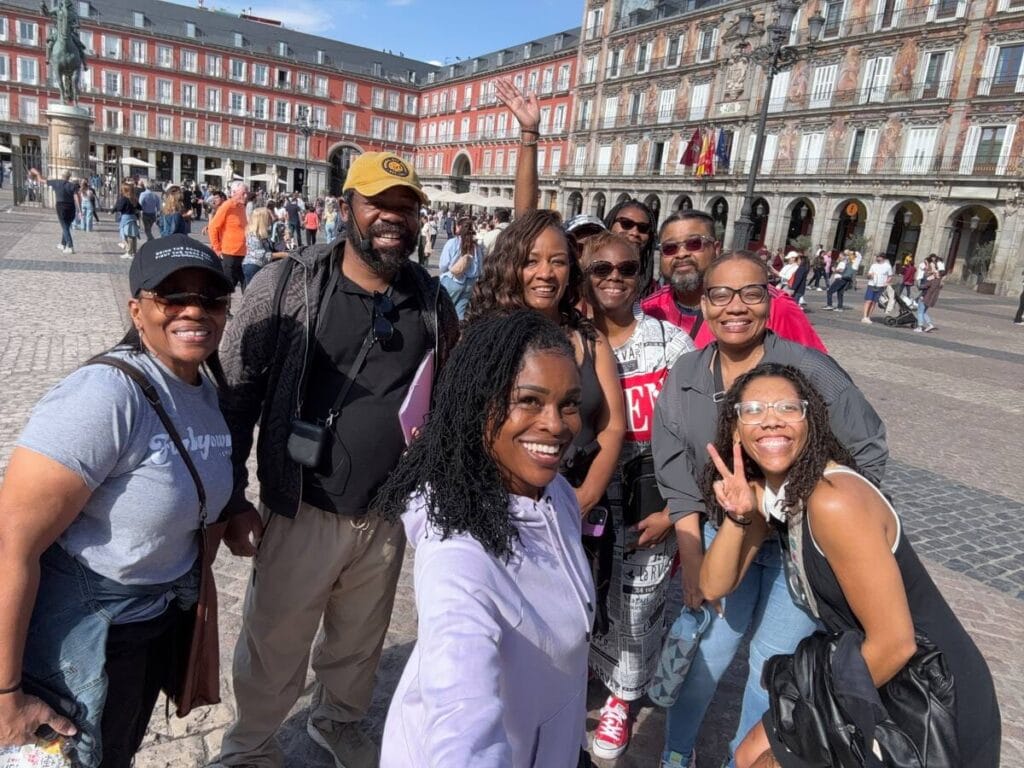
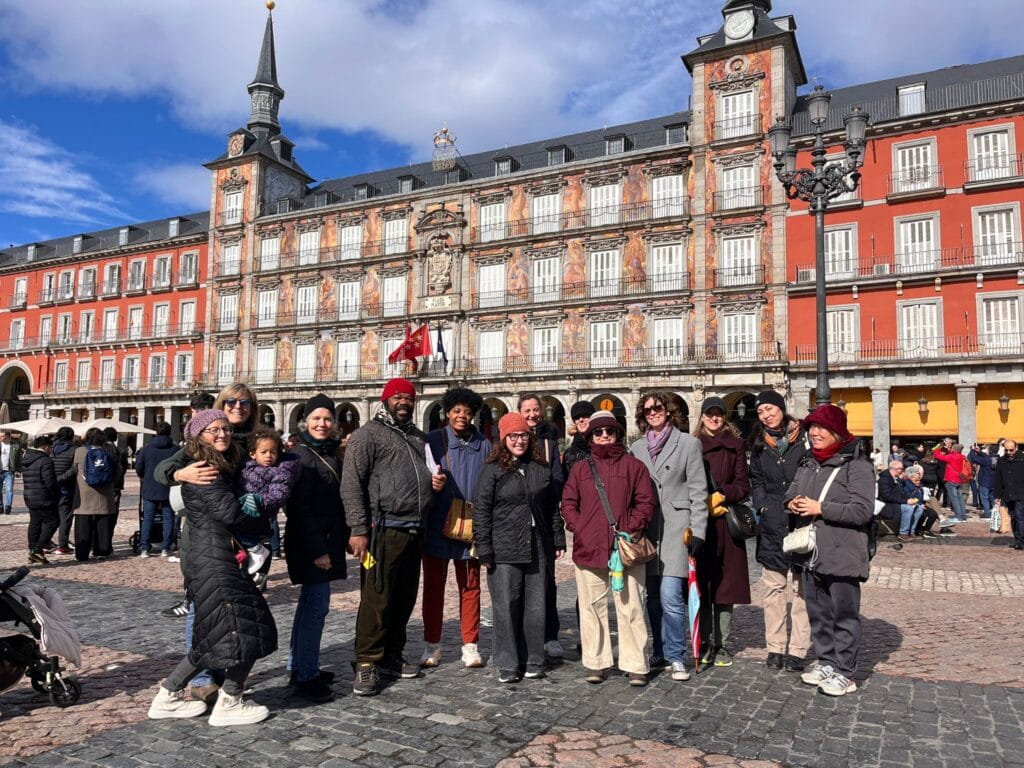
The story of Black people in Spain didn’t begin with slavery, or even with Columbus, but centuries earlier. This lesser-known narrative is explored in the latest episode of the Making Madrid Podcast, where I sat down with Kwame Ondo, a tour guide, actor, and activist who has made it his mission to bring Madrid’s hidden Black history to light on his Afro Ibería tours.
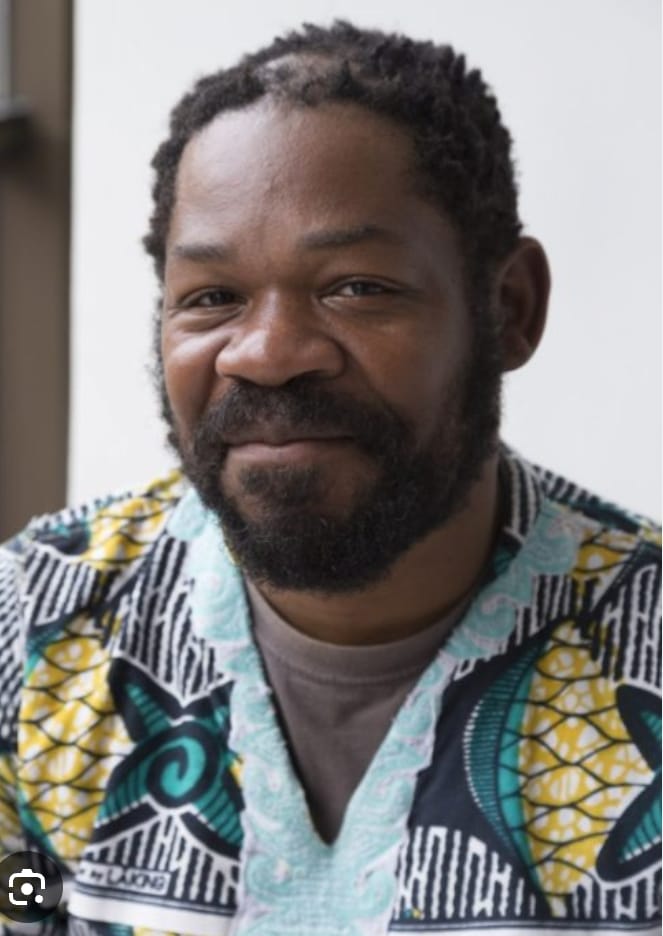
Kwame’s journey to Madrid was an unexpected one. Originally working as a tour guide in Barcelona, the COVID pandemic uprooted his plans and led him to the capital. It was in Madrid that he turned years of involvement in Black activist circles in the UK, Barcelona, and Spain into something concrete: a walking tour that tells the stories your school textbooks left out.
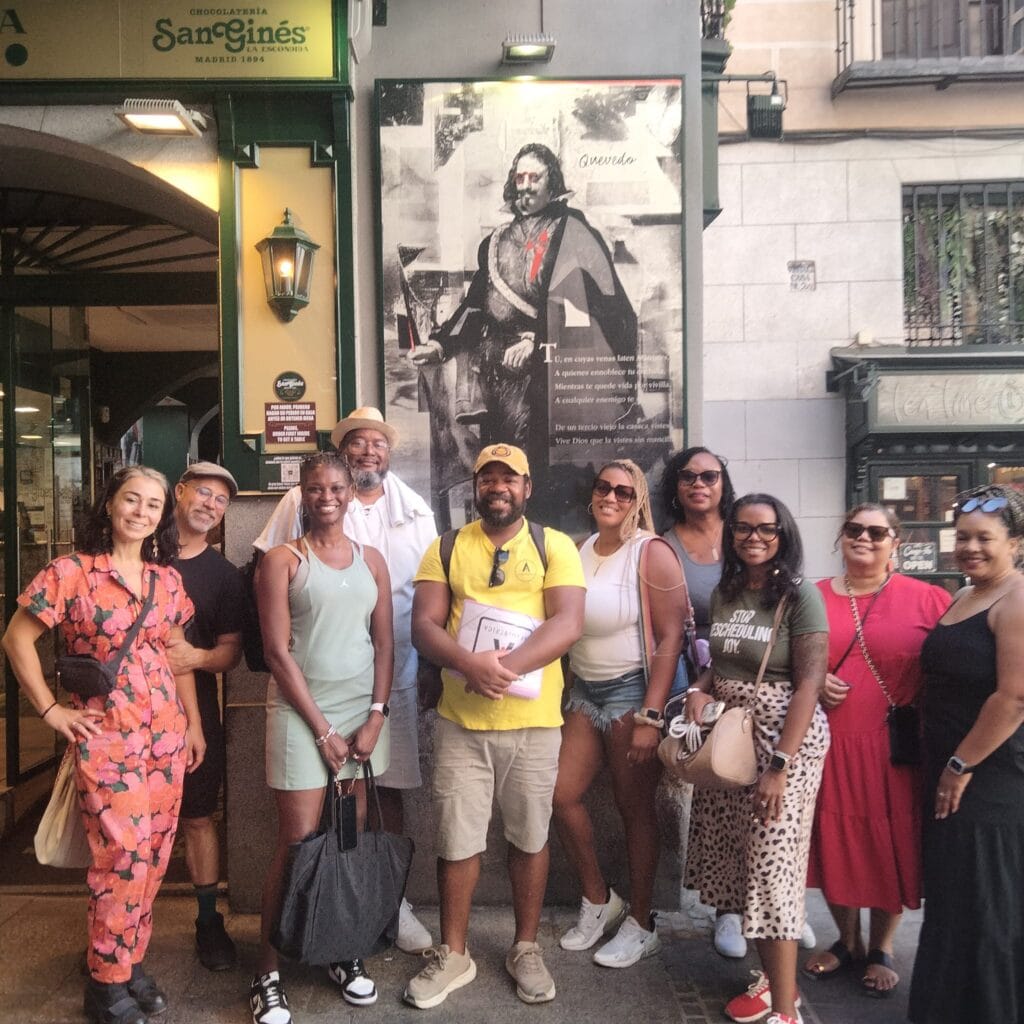
The tour — now split into two parts covering both the old and modern city — takes participants through over a thousand years of Black presence in the Iberian Peninsula. Kwame argues that this history predates Columbus entirely, pointing to the peninsula’s geographic proximity to Africa and evidence of sub-Saharan Africans travelling to Europe for trade and commerce long before the colonial era. From the time of Al-Andalus, through to slavery during colonial times, the story is woven throughout Spanish art, literature, and architecture — if you know where to look.
In the interview, we also discuss the remarkable story of Juan de Pareja — a slave who became an accomplished painter — and the largely forgotten abolitionist movement led by Spain’s first Republic president, Emilio Castelar, who famously had to flee the country after reading a public letter condemning the families still profiting from slavery.
Kwame speaks candidly about the state of diversity in Madrid today, the effects of gentrification on Black communities, and his Pan-Africanist perspective on migration, European resource extraction, and what genuine justice would actually look like. For Black American visitors in particular, he describes the tour as a chance to “see the city through new eyes” — to feel part of a history that powerful interests have long worked to obscure.
Whether you’re a history buff, a visitor trying to understand Madrid more deeply, or someone who suspects there’s a lot more to the story of Europe than you’ve been told — this is a conversation well worth your time.
You can book Kwame’s tour via his website, where you’ll find contact details via email, WhatsApp, and Instagram.
- Book Kwame at: Afro Ibería Tours
- Documentary about Black Africans in Renaissance Europe: We Were Here
- Painter and former slave: Juan de Pareja
- Kwame restaurant recommendations: Dakar and Los Caracoles
Interview Transcript
Disclaimer: This is an automatically generated transcript, so may contain errors.
HOST: Hello Kwame. Hello, good morning. Welcome to the making Madrid podcast. Thank you very much.
KWAME: It’s nice to have you here today in. Beautiful Usera. Yeah. Okay, look Cafe. Okay.
HOST: People listening, might hear some background noise. Okay, that’s right. Um, So let’s kick off by me asking you what brought you to Madrid.
KWAME: What brought me to Madrid it was The covid. That brought me to Madrid. I was in Barcelona was working as a tour guide in Barcelona for different companies and obviously all of a sudden in 2021, everything stopped And I was getting work as an actor here in Madrid. And I decided to move to Madrid because Madrid was a bit more open a bit more flexible with all the restrictions that are in common, One sec.
HOST: Well, we have a pause. I’m worried about your mic. Is it all this?
KWAME: I don’t know. It’s there.
HOST: That’s fine. Okay, it’ll be picking up. Okay, Because I couldn’t see it. I was like Um, Can you tell me a little bit about the tour that you started up in Madrid?
KWAME: Well, the tour basically is a recapitulation of all of the stories that we have never been told at school. The tour started, because Working as a tour guide in Barcelona, I realised. That for some of the black Travellers mostly from the United States, they were not getting the full picture.
And I could sense that there was something missing. Uh, they would enjoying experience. And the and the tourism in Barcelona but I could sense that something was not fully complete. So, I decided to start. You know, putting all of these stories because I have been involved. For many years, in some active, black activist groups in the UK.
In Barcelona and also here in Madrid with the Panafricana movement and stuff like that. So I decided to put the two and two together, a bit of experience as a tour guide, and also My experience also in Black activist groups, okay, the whole tour together and what’s been a reaction from your clients, the reaction has been very positive.
Because people or most of the people that come to the tour, don’t have a clue, don’t have an idea of what, you know, these kind of stories here in Spain. So For a lot of people it’s very surprising because they have never, some of them might have some a little bit idea, but For most people.
They don’t know, you know about the black contributions. And the black history and colonisation and culture has been present in Spain for many, many centuries. So, new clients aren’t only black Americans. Have a Spanish people as well. Yeah, I have Spanish people. I mean that’s from also that background.
The people that really keep the the project going is people from the United States, okay, most of them are African Americans but also I have different. Organisations and institutions schools to universities ngos, I don’t know. Anthropology groups, you know, I have all of these groups of people, you know, coming into the tour because they want to know and they want to learn about that history in Spain.
Also, obviously I have people from France England, and in the last few months it’s been a lot of Spanish coming into the tour.
HOST: So that’s a really good time because you actually grew up in Spain so that which —
KWAME: Yeah, I grew up in Spain. My mum brought me to Spain on me and my brothers and sisters. When I was eight, And I grew up in the South of Andalucía. I lived there for eight years and then I moved to Galicia I’m from Galicia. I’m off to the UK where I spent 17 years.
HOST: Do you still have an Andalucian accent?
KWAME: No, no not anymore. It’s really hard for me to understand that accent.
HOST: That’s just… what, do you watch TV shows?
KWAME: And that was struggling. Yeah but you know I think it’s spending enough time with some of my friends stuff like that it will come and see.
HOST: Okay. Um, what challenges did you face when you were researching at all?
KWAME: The challenges that I face obviously. In times of the, the challenges, it was more about Worrying about if this was gonna work. Uh, because I didn’t have any sort of, you know, notion. That a tour like this, you know, I knew it was gonna attract some people but Uh, you don’t know if the tour is really gonna, you know, be fully functional and, you know, But that was really my biggest challenge in terms of putting the work together, there is a lot of work out there.
Uh, black historical black historians. Uh, Spanish historians the internet. I don’t know, accessing these groups. They all have a lot of information, you know, you just have to go. To the right places for to get that information.
HOST: Yeah. And Obviously every now and then in some articles you have to visit Museum, you have to go to talks University and places like that.
KWAME: But you know, it’s not a lot of it but there is enough to, to put a whole story together.
HOST: So, getting into the history itself. Uh, I don’t know a lot at all. I’m completely ignorant. I would say if we talk about sub-Saharans arriving in the Iberian Peninsula, when does that history begin?
KWAME: Well, it’s a very long way. Way before. Christopher Columbus because we have to learn that Spain was the fourth largest from the Roman Empire, Britain, France, Portugal and Spain. But Spain is also the closest one to Africa. Huh? From a specific points in La Spain. We see Africa, we see Africa from Tarifa, from La Línea, it’s just you can see it.
Okay, so that connection has always been there, okay? So for me, it’s really unbelievable to think that people prefer to believe that Christopher Columbus made it to America and Africans to Europe or the other way around.
HOST: Yeah.
KWAME: Okay, so that connection has always been there. Uh, I think. Some. People from Ghana, from Nigeria, from Ethiopia, they were used, they were coming to Europe. To negotiate and to trade for commerce and for stuff like that way way before Columbus. So a lot of those Africans that were already here. Okay, so that’s the that’s the story, you know? I don’t know how far back that goes.
HOST: Yeah, but it’s so close that it’s a way of infantilizing people to make a belief that there was not historical connection. Yeah before Columbus. Let’s pause the second because this your top keeps covering microphone. So if you do it, like that’s going to be good. Just take it off.
Cause afterwards, I’ll be like he might start. So are we talking about the time of the Phoenicians when there was a lot of trade, going around, the Mediterranean,
KWAME: I don’t know exactly about the Phoenicians Uh, but I want to think And obviously, there is a very good documentary. Yeah, I think it’s the name of that documentary that talks about all these kind of people of Africans that were coming into Europe to negotiate and to trade with people from, I don’t know from people from the Vatican and France, and Italy and, you know, different places.
So and we also have knowledge. I also have knowledge that the the Chinese were also trading with people in South Africa with different tribes in South Africa. So you know, that story depends on who tells the story, you know, they’re gonna have their own connections with the African continent.
So it’s not only one simple story of why the Europeans you know Telling everything, you know, okay? All of these different groups, the Moors and And the North Africans. The Chinese. The all of these groups there were there had their own commercial Let’s say situation with the African continent, way before Columbus.
HOST: Yeah, and let’s talk about Al-Andalus. Then there was a lot of people from North Africa and Berber tribes coming. Uh, there were people from further south coming to.
KWAME: Yeah, yeah, I mean the the the the Moors from North Africa, obviously they are the ones that stayed the longer. Uh, in in Europe, some eight centuries, but also, there was people from sub-Saharan Africa coming and to trade and to negotiate terms, you know, Commerce mainly and new new routes of trading And all of those people, you know, we don’t have a lot of, you know, knowledge about those guys.
But You might be able to find it in some documents and some documentaries and some other places but you know, there is not a lot of information.
HOST: If we move forward to, when Madrid became the capital effectively of Spain in 70. Sorry, 66 in 1561 Um, would you have seen many black people out on the streets of Madrid?
KWAME: I mean, it is estimated that in the 18th century Madrid. There was a population of about. 200 000 people. Out of all 200, 000 people. There it is. Estimated that 6 000 of them were enslaved people. Okay. So, it’s a big number, but they, um, the exact number of black Africans in Madrid.
I mean there are different Writers. Some of the most important and famous writers in Spanish history. Uh, they were writing we find entire passages in their books where they are, describing the presence of black people in Madrid and not only Madrid and the rest of Spain, okay? Especially in the South where in Sevilla and Cádiz as the key cities.
Because of the amount of black people that were on those places. Okay. So most of the blacks that used to be in Spain. At that time, they were in the south of Spain, but also in Madrid. We have stories where we find different people, you know, doing works like a Muslim construction.
In Madrid. For instance, most of these black slaves, they used to work in domestic work. Uh, we have painters very famous painters Goya and Velázquez that they were painting black people, okay? And So we have writers, we have paintings, we have you know, different people in the society at that time, describing about the presence of black people in Madrid.
HOST: It is a lot of Goya’s work in the Prado. Is there a particular painting that you would point people going and see?
KWAME: Well there is one oh not a painter. A painting is more like a painter. I think they might have some work by. Juan de Pareja — Juan de Pareja was the slave and he was a painter in his own, right?
And he became very famous because was the second or the first of second, black Spanish painter to have been exhibited at the Prado. You see him and the first black Spanish painted to have been exhibited at the Metropolitan in New York. There’s also another painting by Velázquez, which is called La mulata, which is a black woman, in fact depicting a black woman painting.
Now, cleaning a house in the 16th 17th century. So Uh there is also the painting of Goya of the Duquesa de Alba and the child black child of Maria De La Luz. So I mean there is all of these different you know, things that we keep finding, you know. In different places but we just need to put the whole thing together and to make it To put the tour together.
HOST: And what about Spain’s history with this slave trade then?
KWAME: I know that the first one to start the slave trade, the African slave trade because Africa, has been obviously started with the Arab slave trade and on the East, but also European slave trade was started in Europe by the Portuguese.
And second to, the Portuguese came in the Spanish. And the Portuguese has been the people with more. Let’s say Number of enslaved. People taken into America. And second to the Portuguese where the Spanish so, okay. But obviously Because the conflict was for many centuries with the Muslim world, the slaves that they were bringing from North Africa.
These people were known as Los moros de presa, the Moors of prey And from the 17th century they mostly started enslaving more people from Sub-Saharan Africa. So obviously all of that, you know, then came the British and the French and, and that went for two three centuries.
HOST: So how about the abolitionist slavery in Spain?
KWAME: Madrid was the place. Probably the most famous for the The abolitionist Society of Madrid. Very interesting, because 18. 17 18. 73 83 The head of that abolitionist Movement was the president of Spain himself of the first Republica and Emilio, Castellar, So at the head of that movement, what’s Emilio Castellar?
And obviously the thing was because on paper slavery was abolished. But it can be in practised illegally for decades after. So Emilio, Castellar de President of Spain, he decided to write a condemnation letter to all of these. Very wealthy families that were still profiting from slavery and And obviously there was that was a lot of trouble for the president.
Because the president after reading that letter in public in Congress, Uh, also to travel started for the president of Spain, he had to flee the country, I’m fine protection in France because here, they wanted to kill. Obviously the families that were still profiting. It was a very tumultuous time.
HOST: I think and presidents didn’t last very long, but yeah, I’ve heard of him that he had a, was he famous for being a great orator for being a good speaker?
KWAME: Exactly. Yeah. That’s right. Okay, second.
HOST: So can you if people come to your tour? Can you give us a little snippet? Like a highlight of something? They might see that in my kind. Interesting. Just a teaser. You don’t have to give any spoiliness.
KWAME: Well, basically, in when the tour what we’re doing, we walk about an hour and 40 minutes and we learn about the contributions of the Moors and the peninsula.
Black historical figures colonisation slavery. And we also learn a little bit about migration and also about symbolism because one of the things that we do in the tour, we try to read out some of the symbols that we don’t know what they mean, but they are connected with slavery.
So that’s a very interesting part of it.
HOST: Okay, so anyone who’s sold on going on Kwame’s tour. With you. How, how can people get in touch with you to book at all?
KWAME: Through the website? Uh, there is on the website contact. You have the email and you have the WhatsApp number so you can Instagram.
HOST: People are listening. Dot com. Okay. So check out afrotour.com and we’ll put a link in the show notes as well. So if you can, How about modern Spain. So, how has diversity changed over the years from we’re talking about when Castelar You know, made this push to completely ban slavery.
KWAME: Uh, diversity. Well, diversity now is complex because of the migration process. Uh, it’s a Labour for for us. I am a Pan-Africanist. Is not an ending process, it’s a transformation process. So keep being transformed. It’s not, it’s not over colonisation still on well alive. Okay, so what they do now for instance is, you know, all of the we’ve seen examples now in the United States where they are kicking out migrants because you know, but also this happens here, I mean in Europe, what the the you EU migration laws that they are stopping people from coming into Europe after stealing the resources in in the African continent.
So You know. So it’s a transformation process. It’s not an ending process, so they keep transforming this whole process into something else, so it’s still well alive. So, In terms of diversity. Obviously, a lot of people, a lot of The migration process comes mostly from South America. Okay, we’re having.
So people, there are a lot of people from Venezuela from Colombia, from Peru, from Bolivia but the African population in Spain. A thing is about a million and a half.
HOST: Yeah. And most of those are from North Africa, from Morocco. Okay. How about what do you think of what’s been happening lately? With Pedro Sanchez.
KWAME: So he’s decided that he’s going to regularise a lot of the people who At the moment here, let’s say illegally, but they need papers and he started that process of them being able to uh, I mean, the ideal situation for me, That of, you know, In the process of legalising people.
For me, coming from a Pan-Africanist background. Would be. That all of these. Activist groups in Spain. Because all is, is also a business. And the sense that All of these Charities and ngos. They are not-for-profit international guys.
HOST: Yeah, it’s a it’s a it’s a it’s a wage here.
KWAME: Okay, so for me the the ideal situation would be That all of these groups, they focused their attentions in their own government and to press their own government and their own policies. And obviously to stop. All of these big. Markets. To stop stealing from the African. Continent.
HOST: Yeah. And to stop putting the military bases in the African continent. And to stop obviously, all of these. Are you talking about the extraction of rare resources?
KWAME: Yeah. So Uh, that is leaning with it. What? Ask time on that, because obviously, it’s an ideal situation and it’s good that people, you know, can have their own peace by taking papers that, um, getting papers and obviously having a good living in life.
But the ideal situation would be really for this governments to stop. You know, we don’t need the charity zero. Yeah. It’s the other way around. Okay. That is the word I stand on that, okay?
HOST: And what do you think the challenges are for black people living and visiting, Madrid these days?
KWAME: Can you repeat that?
HOST: What is the challenges for black people, living and visiting, Madrid these days?
KWAME: The challenges are to find a connection. Oh, most of the feedback that people tell me is that they know, they don’t see a lot of black people. Yeah, in Madrid. Okay, but it’s not that there is no black people.
It’s just that the most of the black people, they don’t live in the city centre. Yeah. Okay. Back in the 90s and 80s, you will see more black people in the street and different neighbourhood, but obviously gentrification has played his role. And lots of the black people, they lived for many, many decades now in places, like, Torrejón, Móstoles, Alcorcón places like that.
Okay. So most of the what we see in the city sometimes like a small representation of black people in. Yeah, which doesn’t have a very good name for yourself, but most of the black communities, they are not going to stay in the city centre. It’s very expensive. And it’s just so most of the, you know, at least people from my country.
Originally, they have been here for very long time because equatorial Guinea For 200 years, a lot of you have a big community here. Uh, yeah, my Madrid. Barcelona Mallorca Bilbao — these like that, you’ll find communities from Guinea, In Madrid in the city, Santa Mónica from Senegal Uh, Gambia and places like that, so yeah.
HOST: How about tourists visiting? A tourist visiting. She said you had a lot of black Americans visits, I was there experience of the country.
KWAME: I think the experience of the experience of the tour gives them is like they visit the city with new eyes. They see the city through New Eyes.
And obviously they needed that kind of connection historical connection, emotional connection. And and they feel that they are part of the experience and part of the contributions that black people have made to Madrid or to Spain in general. Okay? So I think it’s about inclusion. It’s about diversity and it’s about obviously being part.
Of the history that All of these Powers they have been trying to keep you away from.
HOST: Yes. So that’s what I’m what is we wrap up the interview, is it anything in particular? You would like to add on the topic History in Spain.
KWAME: No, come and visit and you, you learn, you know, that’s it, you know, come and visit and, you know, I’ll show you around and explain you.
And I tell you, you know, there’s a lot of lots of different things. Obviously the tour it used to go for Almost three hours and a half, but obviously. Uh, we’ve cut it short. And now, it’s have been split into two parts. So one is the old town of Madrid. And the other one is the modern part of Madrid and in both tours, we have, we see, we learn about different things, you know?
Uh, the second part of the tour, the modern part of Madrid. We talk more about things issues concerning more the 19th century to the to this day 19th century to this day and before that is like from the 19th century to the 9th century and things like that. So we do like a big, you know we cover a lot of ground.
HOST: Yes. Yes it’s a big topic and we’ve already just touched the surface of it today, but hopefully that will give you a taste and making wanna, for one of his tours. And before we finish, I want you to tell me what’s your favourite place in Madrid and why?
KWAME: My favourite place in Madrid Really. Where my friends are. Because I don’t get to go out a lot. I mean I enjoy being, you know, going for tapas to La Latina to Lavapiés. I think mostly probably is Lavapiés because lots of my friends are now around there. But really, I like to be at home. I like to be in my neighbourhood because I live in a small kind of green area and small houses and spiritually peaceful.
It’s not a lot of traffic. So I like that, you know, I like I like where I am.
HOST: And you say that so can you recommend people place for tapas, maybe in place.
KWAME: I don’t know. I mean, To places.
HOST: He doesn’t want to give away his suit.
KWAME: No. No, I mean there is really good Senegalese bar which is the Dakar restaurant. It was really good that you treat you really well and in the evening Saturday evening they play live music. Uh, there is also I don’t know how everything I forgot the names. Now, Los Caracoles. In in Cascorro. It’s a good place. I like to go there when my friends from from Bristol visit.
HOST: Um, If you recommendations there, and what’s your favourite Spanish word?
KWAME: My favourite Spanish word. Las, I don’t know. I think I think it’s, I’m English is good. Yeah, I like being with my friends.
HOST: So All right. Well, thank you very much for coming in the podcast.
KWAME: Thank you very much.
HOST: Okay, goodbye.
KWAME: No, thank you. Bye.
HOST: All done.HOST: You hear me. All right, so calling. All right. Look, it tells me the script and everything, okay? It’s very good. Pronunciation named Kwame Kwame. Okay. Hello, I need to leave a second of silence. Okay. Hello Kwame. Hello, good morning. Welcome to the making Madrid podcast. Thank you very much.
KWAME: It’s nice to have you here today in. Beautiful Usera. Yeah. Okay, look Cafe. Okay.
HOST: People listening, might hear some background noise. Okay, that’s right. Um, So let’s kick off by me asking you what brought you to Madrid.
KWAME: What brought me to Madrid it was The covid. That brought me to Madrid. I was in Barcelona was working as a tour guide in Barcelona for different companies and obviously all of a sudden in 2021, everything stopped And I was getting work as an actor here in Madrid. And I decided to move to Madrid because Madrid was a bit more open a bit more flexible with all the restrictions that are in common, One sec.
HOST: Well, we have a pause. I’m worried about your mic. Is it all this?
KWAME: I don’t know. It’s there.
HOST: That’s fine. Okay, it’ll be picking up. Okay, Because I couldn’t see it. I was like Um, Can you tell me a little bit about the tour that you started up in Madrid?
KWAME: Well, the tour basically is a recapitulation of all of the stories that we have never been told at school. The tour started, because Working as a tour guide in Barcelona, I realised. That for some of the black Travellers mostly from the United States, they were not getting the full picture.
And I could sense that there was something missing. Uh, they would enjoying experience. And the and the tourism in Barcelona but I could sense that something was not fully complete. So, I decided to start. You know, putting all of these stories because I have been involved. For many years, in some active, black activist groups in the UK.
In Barcelona and also here in Madrid with the Panafricana movement and stuff like that. So I decided to put the two and two together, a bit of experience as a tour guide, and also My experience also in Black activist groups, okay, the whole tour together and what’s been a reaction from your clients, the reaction has been very positive.
Because people or most of the people that come to the tour, don’t have a clue, don’t have an idea of what, you know, these kind of stories here in Spain. So For a lot of people it’s very surprising because they have never, some of them might have some a little bit idea, but For most people.
They don’t know, you know about the black contributions. And the black history and colonisation and culture has been present in Spain for many, many centuries. So, new clients aren’t only black Americans. Have a Spanish people as well. Yeah, I have Spanish people. I mean that’s from also that background.
The people that really keep the the project going is people from the United States, okay, most of them are African Americans but also I have different. Organisations and institutions schools to universities ngos, I don’t know. Anthropology groups, you know, I have all of these groups of people, you know, coming into the tour because they want to know and they want to learn about that history in Spain.
Also, obviously I have people from France England, and in the last few months it’s been a lot of Spanish coming into the tour.
HOST: So that’s a really good time because you actually grew up in Spain so that which —
KWAME: Yeah, I grew up in Spain. My mum brought me to Spain on me and my brothers and sisters. When I was eight, And I grew up in the South of Andalucía. I lived there for eight years and then I moved to Galicia I’m from Galicia. I’m off to the UK where I spent 17 years.
HOST: Do you still have a Galego?
KWAME: No, no not anymore. It’s really hard for me to understand that accent.
HOST: That’s just… what, do you watch TV shows?
KWAME: And that was struggling. Yeah but you know I think it’s spending enough time with some of my friends stuff like that it will come and see.
HOST: Okay. Um, what challenges did you face when you were researching at all?
KWAME: The challenges that I face obviously. In times of the, the challenges, it was more about Worrying about if this was gonna work. Uh, because I didn’t have any sort of, you know, notion. That a tour like this, you know, I knew it was gonna attract some people but Uh, you don’t know if the tour is really gonna, you know, be fully functional and, you know, But that was really my biggest challenge in terms of putting the work together, there is a lot of work out there.
Uh, black historical black historians. Uh, Spanish historians the internet. I don’t know, accessing these groups. They all have a lot of information, you know, you just have to go. To the right places for to get that information.
HOST: Yeah. And Obviously every now and then in some articles you have to visit Museum, you have to go to talks University and places like that.
KWAME: But you know, it’s not a lot of it but there is enough to, to put a whole story together.
HOST: So, getting into the history itself. Uh, I don’t know a lot at all. I’m completely ignorant. I would say if we talk about sub-Saharans arriving in the Iberian Peninsula, when does that history begin?
KWAME: Well, it’s a very long way. Way before. Christopher Columbus because we have to learn that Spain was the fourth largest from the Roman Empire, Britain, France, Portugal and Spain. But Spain is also the closest one to Africa. Huh? From a specific points in La Spain. We see Africa, we see Africa from Tarifa, from La Línea, it’s just you can see it.
Okay, so that connection has always been there, okay? So for me, it’s really unbelievable to think that people prefer to believe that Christopher Columbus made it to America and Africans to Europe or the other way around.
HOST: Yeah.
KWAME: Okay, so that connection has always been there. Uh, I think. Some. People from Ghana, from Nigeria, from Ethiopia, they were used, they were coming to Europe. To negotiate and to trade for commerce and for stuff like that way way before Columbus. So a lot of those Africans that were already here. Okay, so that’s the that’s the story, you know? I don’t know how far back that goes.
HOST: Yeah, but it’s so close that it’s a way of infantilizing people to make a belief that there was not historical connection. Yeah before Columbus. Let’s pause the second because this your top keeps covering microphone. So if you do it, like that’s going to be good. Just take it off.
Cause afterwards, I’ll be like he might start. So are we talking about the time of the Phoenicians when there was a lot of trade, going around, the Mediterranean,
KWAME: I don’t know exactly about the Phoenicians Uh, but I want to think And obviously, there is a very good documentary. Yeah, I think it’s the name of that documentary that talks about all these kind of people of Africans that were coming into Europe to negotiate and to trade with people from, I don’t know from people from the Vatican and France, and Italy and, you know, different places.
So and we also have knowledge. I also have knowledge that the the Chinese were also trading with people in South Africa with different tribes in South Africa. So you know, that story depends on who tells the story, you know, they’re gonna have their own connections with the African continent.
So it’s not only one simple story of why the Europeans you know Telling everything, you know, okay? All of these different groups, the Moors and And the North Africans. The Chinese. The all of these groups there were there had their own commercial Let’s say situation with the African continent, way before Columbus.
HOST: Yeah, and let’s talk about Al-Andalus. Then there was a lot of people from North Africa and Berber tribes coming. Uh, there were people from further south coming to.
KWAME: Yeah, yeah, I mean the the the the Moors from North Africa, obviously they are the ones that stayed the longer. Uh, in in Europe, some eight centuries, but also, there was people from sub-Saharan Africa coming and to trade and to negotiate terms, you know, Commerce mainly and new new routes of trading And all of those people, you know, we don’t have a lot of, you know, knowledge about those guys.
But You might be able to find it in some documents and some documentaries and some other places but you know, there is not a lot of information.
HOST: If we move forward to, when Madrid became the capital effectively of Spain in 70. Sorry, 66 in 1561 Um, would you have seen many black people out on the streets of Madrid?
KWAME: I mean, it is estimated that in the 18th century Madrid. There was a population of about. 200 000 people. Out of all 200, 000 people. There it is. Estimated that 6 000 of them were enslaved people. Okay. So, it’s a big number, but they, um, the exact number of black Africans in Madrid.
I mean there are different Writers. Some of the most important and famous writers in Spanish history. Uh, they were writing we find entire passages in their books where they are, describing the presence of black people in Madrid and not only Madrid and the rest of Spain, okay? Especially in the South where in Sevilla and Cádiz as the key cities.
Because of the amount of black people that were on those places. Okay. So most of the blacks that used to be in Spain. At that time, they were in the south of Spain, but also in Madrid. We have stories where we find different people, you know, doing works like a Muslim construction.
In Madrid. For instance, most of these black slaves, they used to work in domestic work. Uh, we have painters very famous painters Goya and Velázquez that they were painting black people, okay? And So we have writers, we have paintings, we have you know, different people in the society at that time, describing about the presence of black people in Madrid.
HOST: It is a lot of Goya’s work in the Prado. Is there a particular painting that you would point people going and see?
KWAME: Well there is one oh not a painter. A painting is more like a painter. I think they might have some work by. Juan de Pareja — Juan de Pareja was the slave and he was a painter in his own, right?
And he became very famous because was the second or the first of second, black Spanish painter to have been exhibited at the Prado. You see him and the first black Spanish painted to have been exhibited at the Metropolitan in New York. There’s also another painting by Velázquez, which is called La mulata, which is a black woman, in fact depicting a black woman painting.
Now, cleaning a house in the 16th 17th century. So Uh there is also the painting of Goya of the Duquesa de Alba and the child black child of Maria De La Luz. So I mean there is all of these different you know, things that we keep finding, you know. In different places but we just need to put the whole thing together and to make it To put the tour together.
HOST: And what about Spain’s history with this slave trade then?
KWAME: I know that the first one to start the slave trade, the African slave trade because Africa, has been obviously started with the Arab slave trade and on the East, but also European slave trade was started in Europe by the Portuguese.
And second to, the Portuguese came in the Spanish. And the Portuguese has been the people with more. Let’s say Number of enslaved. People taken into America. And second to the Portuguese where the Spanish so, okay. But obviously Because the conflict was for many centuries with the Muslim world, the slaves that they were bringing from North Africa.
These people were known as Los moros de presa, the Moors of prey And from the 17th century they mostly started enslaving more people from Sub-Saharan Africa. So obviously all of that, you know, then came the British and the French and, and that went for two three centuries.
HOST: So how about the abolitionist slavery in Spain?
KWAME: Madrid was the place. Probably the most famous for the The abolitionist Society of Madrid. Very interesting, because 18. 17 18. 73 83 The head of that abolitionist Movement was the president of Spain himself of the first Republica and Emilio, Castellar, So at the head of that movement, what’s Emilio Castellar?
And obviously the thing was because on paper slavery was abolished. But it can be in practised illegally for decades after. So Emilio, Castellar de President of Spain, he decided to write a condemnation letter to all of these. Very wealthy families that were still profiting from slavery and And obviously there was that was a lot of trouble for the president.
Because the president after reading that letter in public in Congress, Uh, also to travel started for the president of Spain, he had to flee the country, I’m fine protection in France because here, they wanted to kill. Obviously the families that were still profiting. It was a very tumultuous time.
HOST: I think and presidents didn’t last very long, but yeah, I’ve heard of him that he had a, was he famous for being a great orator for being a good speaker?
KWAME: Exactly. Yeah. That’s right. Okay, second.
HOST: So can you if people come to your tour? Can you give us a little snippet? Like a highlight of something? They might see that in my kind. Interesting. Just a teaser. You don’t have to give any spoiliness.
KWAME: Well, basically, in when the tour what we’re doing, we walk about an hour and 40 minutes and we learn about the contributions of the Moors and the peninsula.
Black historical figures colonisation slavery. And we also learn a little bit about migration and also about symbolism because one of the things that we do in the tour, we try to read out some of the symbols that we don’t know what they mean, but they are connected with slavery.
So that’s a very interesting part of it.
HOST: Okay, so anyone who’s sold on going on Kwame’s tour. With you. How, how can people get in touch with you to book at all?
KWAME: Through the website? Uh, there is on the website contact. You have the email and you have the WhatsApp number so you can Instagram.
HOST: People are listening. Dot com. Okay. So check out afrotour.com and we’ll put a link in the show notes as well. So if you can, How about modern Spain. So, how has diversity changed over the years from we’re talking about when Castelar You know, made this push to completely ban slavery.
KWAME: Uh, diversity. Well, diversity now is complex because of the migration process. Uh, it’s a Labour for for us. I am a Pan-Africanist. Is not an ending process, it’s a transformation process. So keep being transformed. It’s not, it’s not over colonisation still on well alive. Okay, so what they do now for instance is, you know, all of the we’ve seen examples now in the United States where they are kicking out migrants because you know, but also this happens here, I mean in Europe, what the the you EU migration laws that they are stopping people from coming into Europe after stealing the resources in in the African continent.
So You know. So it’s a transformation process. It’s not an ending process, so they keep transforming this whole process into something else, so it’s still well alive. So, In terms of diversity. Obviously, a lot of people, a lot of The migration process comes mostly from South America. Okay, we’re having.
So people, there are a lot of people from Venezuela from Colombia, from Peru, from Bolivia but the African population in Spain. A thing is about a million and a half.
HOST: Yeah. And most of those are from North Africa, from Morocco. Okay. How about what do you think of what’s been happening lately? With Pedro Sanchez.
KWAME: So he’s decided that he’s going to regularise a lot of the people who At the moment here, let’s say illegally, but they need papers and he started that process of them being able to uh, I mean, the ideal situation for me, That of, you know, In the process of legalising people.
For me, coming from a Pan-Africanist background. Would be. That all of these. Activist groups in Spain. Because all is, is also a business. And the sense that All of these Charities and ngos. They are not-for-profit international guys.
HOST: Yeah, it’s a it’s a it’s a it’s a wage here.
KWAME: Okay, so for me the the ideal situation would be That all of these groups, they focused their attentions in their own government and to press their own government and their own policies. And obviously to stop. All of these big. Markets. To stop stealing from the African. Continent.
HOST: Yeah. And to stop putting the military bases in the African continent. And to stop obviously, all of these. Are you talking about the extraction of rare resources?
KWAME: Yeah. So Uh, that is leaning with it. What? Ask time on that, because obviously, it’s an ideal situation and it’s good that people, you know, can have their own peace by taking papers that, um, getting papers and obviously having a good living in life.
But the ideal situation would be really for this governments to stop. You know, we don’t need the charity zero. Yeah. It’s the other way around. Okay. That is the word I stand on that, okay?
HOST: And what do you think the challenges are for black people living and visiting, Madrid these days?
KWAME: Can you repeat that?
HOST: What is the challenges for black people, living and visiting, Madrid these days?
KWAME: The challenges are to find a connection. Oh, most of the feedback that people tell me is that they know, they don’t see a lot of black people. Yeah, in Madrid. Okay, but it’s not that there is no black people.
It’s just that the most of the black people, they don’t live in the city centre. Yeah. Okay. Back in the 90s and 80s, you will see more black people in the street and different neighbourhood, but obviously gentrification has played his role. And lots of the black people, they lived for many, many decades now in places, like, Torrejón, Móstoles, Alcorcón places like that.
Okay. So most of the what we see in the city sometimes like a small representation of black people in. Yeah, which doesn’t have a very good name for yourself, but most of the black communities, they are not going to stay in the city centre. It’s very expensive. And it’s just so most of the, you know, at least people from my country.
Originally, they have been here for very long time because equatorial Guinea For 200 years, a lot of you have a big community here. Uh, yeah, my Madrid. Barcelona Mallorca Bilbao — these like that, you’ll find communities from Guinea, In Madrid in the city, Santa Mónica from Senegal Uh, Gambia and places like that, so yeah.
HOST: How about tourists visiting? A tourist visiting. She said you had a lot of black Americans visits, I was there experience of the country.
KWAME: I think the experience of the experience of the tour gives them is like they visit the city with new eyes. They see the city through New Eyes.
And obviously they needed that kind of connection historical connection, emotional connection. And and they feel that they are part of the experience and part of the contributions that black people have made to Madrid or to Spain in general. Okay? So I think it’s about inclusion. It’s about diversity and it’s about obviously being part.
Of the history that All of these Powers they have been trying to keep you away from.
HOST: Yes. So that’s what I’m what is we wrap up the interview, is it anything in particular? You would like to add on the topic History in Spain.
KWAME: No, come and visit and you, you learn, you know, that’s it, you know, come and visit and, you know, I’ll show you around and explain you.
And I tell you, you know, there’s a lot of lots of different things. Obviously the tour it used to go for Almost three hours and a half, but obviously. Uh, we’ve cut it short. And now, it’s have been split into two parts. So one is the old town of Madrid. And the other one is the modern part of Madrid and in both tours, we have, we see, we learn about different things, you know?
Uh, the second part of the tour, the modern part of Madrid. We talk more about things issues concerning more the 19th century to the to this day 19th century to this day and before that is like from the 19th century to the 9th century and things like that. So we do like a big, you know we cover a lot of ground.
HOST: Yes. Yes it’s a big topic and we’ve already just touched the surface of it today, but hopefully that will give you a taste and making wanna, for one of his tours. And before we finish, I want you to tell me what’s your favourite place in Madrid and why?
KWAME: My favourite place in Madrid Really. Where my friends are. Because I don’t get to go out a lot. I mean I enjoy being, you know, going for tapas to La Latina to Lavapiés. I think mostly probably is Lavapiés because lots of my friends are now around there. But really, I like to be at home. I like to be in my neighbourhood because I live in a small kind of green area and small houses and spiritually peaceful.
It’s not a lot of traffic. So I like that, you know, I like I like where I am.
HOST: And you say that so can you recommend people place for tapas, maybe in place.
KWAME: I don’t know. I mean, To places.
HOST: He doesn’t want to give away his suit.
KWAME: No. No, I mean there is really good Senegalese bar which is the Dakar restaurant. It was really good that you treat you really well and in the evening Saturday evening they play live music. Uh, there is also I don’t know how everything I forgot the names. Now, Los Caracoles. In in Cascorro. It’s a good place. I like to go there when my friends from from Bristol visit.
HOST: Um, If you recommendations there, and what’s your favourite Spanish word?
KWAME: My favourite Spanish word. Amigas, I don’t know. I think I think it’s, I’m English is good. Yeah, I like being with my friends.
HOST: So All right. Well, thank you very much for coming in the podcast.
KWAME: Thank you very much.
HOST: Okay, goodbye.