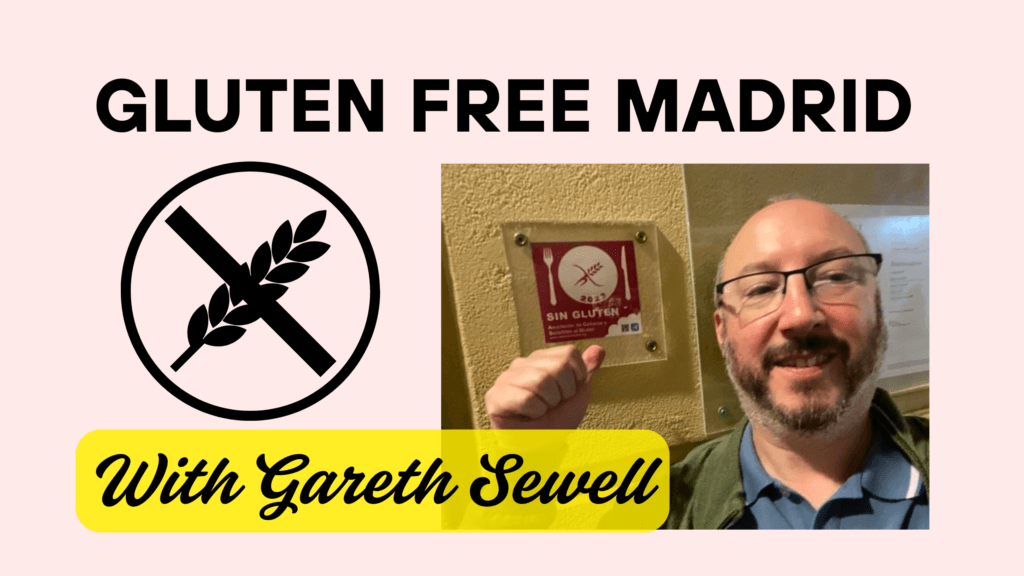
After recently developing a mild intolerance to wheat, I was pleasantly surprised to discover that Madrid is an excellent destination for gluten free eating. Knowing that this was an issue that affects many travellers, I decided to sit down with a proper expert to get the low down for my podcast. Gareth Sewell is an event photographer and videographer based in Madrid who was diagnosed with celiac disease around 2019, just before the pandemic. Despite this, Gareth has remained a committed foodie, spending the past few years testing out what works and what doesn’t across the city’s bars and restaurants, so you don’t have to. Here’s his advice for wheat-free dining in the city.
Prefer to listen?
Is Madrid Actually Good for Celiacs?
Gareth’s verdict: Spain is a great country for celiacs, and Madrid more than holds its own in this respect, though he rates Asturias as having an even higher concentration of dedicated gluten-free tapas places. The difference he’s noticed compared with France (his wife is French) is telling — in France, he says, the responsibility tends to fall on the customer to work out what they can and can’t eat, whereas in Spain, restaurant staff take a more active role in advising and accommodating guests. He puts this down to Spain’s position as a major holiday destination, which has pushed restaurants to get better at handling food intolerances and allergies.
He did note one country he rates above Spain: Italy, where restaurants and shops offer proper gluten-free versions of dishes like pasta and pizza, including separate kitchens for preparation.
In Madrid and Spain generally, Gareth says restaurants of a reasonable size usually have separate frying areas and can accommodate celiac diners without much fuss. It’s mostly in the smaller, family-run places that you might run a risk of cross-contamination.
The Vocabulary You’ll Need
You don’t need much Spanish to eat safely in Madrid. Gareth’s go-to phrases:
- “Soy celíaco” / “soy celíaca” (I’m celiac): Say this and staff will understand immediately that it means no gluten. The ‘o’ at the end if you’re a man, ‘a’ if you’re a woman!
- “Sin gluten, por favor” (without gluten, please): Useful when ordering.
- If a free tapa arrives with a drink, Gareth asks: “¿Tiene un aperitivo que no tenga gluten, por favor?” (Could I have a gluten-free aperitif please?) to check if there’s a gluten-free option.
- With crisps, it’s worth asking: “¿Pueden contener trazas de gluten?” (could they contain traces of gluten?) since some brands vary — crisps that come in the big bags at tapas bars, made simply from potato, oil and salt, are usually safe, while more processed varieties can be a problem.
Gareth says that around 99% of the time, telling staff you’re celiac gets taken seriously, and at some higher-end restaurants they’ll automatically remove lactose too, since celiac disease and lactose intolerance often go together.
Watch Out for Cross-Contamination
The biggest risk for celiacs in Madrid isn’t a lack of gluten-free food — it’s cross-contamination. Gareth flagged a few common culprits:
- Picos (the small breadsticks often served with tapas) are a frequent issue, since they can end up resting directly on top of a tapa like ham or cheese, contaminating it.
- Croquetas typically have breadcrumbs on the outside and are deep fried, so both the coating and the shared fryer oil can be a risk unless a restaurant has a dedicated gluten-free fryer.
- Traditional bread-with-everything culture in Spain means a lot of tapas are served on toast, so it’s worth asking if a gluten-free version is available — some bars will swap it out, but it depends on the venue.
Where to Buy Gluten-Free Bread and Products
For self-catering or snacking, Gareth’s recommendations:
- Mercadona: his go-to supermarket, less because it’s uniquely well-stocked and more because its labelling is particularly clear. Their gluten-free cheese-filled gnocchi came highly recommended and I can confirm, they are delicious!
- Leon the Baker: a gluten-free (and lactose-free) bakery with several outlets in Madrid. Beyond bread, they do cheesecake and empanadas (pastries).
- Schär: a widely available gluten-free brand across Europe, which Gareth describes as decent but not his favourite.
- Mercadona’s own gluten-free bread: a soft, sliced white or brown seeded bread.
- Pastelería Oriental Sin Gluten: do sweet and savoury gluten-free items.
Traditional Spanish Dishes You Can Still Enjoy
A lot of classic Madrid and Spanish cooking is naturally gluten-free. Gareth points out that simply prepared meat, fish, vegetables, salad, potatoes, rice and beans are generally safe bets, since Spanish cooking tends to favour good ingredients over heavy sauces. The exceptions to watch for are dishes where wheat flour is used as a thickener in sauces, or where meat (like beef or pork cheeks) is coated in flour before cooking.
Paella: Largely gluten-free when made properly, though cheaper restaurants using frozen paella mixes can introduce colourings or trace contamination — Gareth recommends going to a proper restaurant for it.
Cachopo: A breaded, cheese-stuffed veal fillet and jamón dish from Asturias, sometimes gets a gluten-free treatment because Asturian versions traditionally use corn flour instead of breadcrumbs on the outside.
Empanada: A pastry filled with meat and cheese, or meat and tomato, or tomato and tuna — is another dish Gareth misses eating freely, but he’s found good gluten-free versions.
Pimientos de padrón: The small green peppers, are fine as long as they’re fried in a separate fryer or cooked on the grill (a la plancha). For the gluten intolerant like me, they don’t pose problems.
From the author
Want to escape the tourist crowds?
My ebook Quiet Madrid reveals the tranquil spaces and hidden places that most visitors never find — five neighbourhood walks, insider timing tips, and a Lonely Planet writer’s years of local knowledge.
Get your copy — €15 → Interactive ebookWhere to Eat Out
Gareth’s personal recommendations, built up over years of testing Madrid’s restaurant scene:
- Yagar La Llobera: An Asturian restaurant near Plaza de Olavide that does cider, wine, roasted meats and tapas. Gareth goes for the chuletón, and it’s one of the places where he’d expect to find beef or pork cheeks, plus gluten-free empanada and cachopo.
- Arrocería Restaurante La Casa de Valencia: Does gluten-free paella.
- Solo de Croquetas: A small chain that does gluten-free croquettes.
- Chocolatería 1902: Both Gareth and I agree that this is the place for proper, well-fried churros, including a gluten-free hot chocolate to go with them.
- Honest Greens: Mostly plant-based restaurant with plenty of gluten-free options.
- Waraku 100% Gluten-free: Gareth’s splash-out choice, at around €70 a head. This Japanese restaurant does a tasting menu with market-fresh fish, along with gluten-free ramen and tempura.
- Okashi Sanda: A more affordable alternative to Waraku, recommended for its karaage (fried chicken) and a divine cheesecake soufflé dessert (one of my faves).
- Bastardi: An Italian spot with excellent GF pasta and stone-baked pizza. Gareth rates the truffle pasta, while I love the carbonara.
- Venta El Buscón: Not a dedicated gluten-free tapas bar, but the staff know Gareth as a regular and will bring tapas without bread, along with a version of patatas bravas made in a separate fryer. The one downside: no gluten-free beer, though he notes gluten-free beer is easy to find in most other bars and restaurants, and Spanish wine is naturally gluten-free.
The Bottom Line
Between clear supermarket labelling, a genuine culture of looking after customers with intolerances and a growing number of dedicated gluten-free spots, Madrid holds up as a destination where celiacs can eat out properly rather than just getting by. As Gareth put it, “Staff in Spain tend to look out for you and want to make sure you have a good time so that you’ll come back.”
You can find more of Gareth’s recommendations at gts-life.com, or follow him on Instagram at @gtslifestyle.



Hi Felicity – I loved the recent podcast on Hemingway’s Madrid. I am a Hemingway nut myself and slightly obsessed about his times in Spain! (see my GR11 blog for an article on Hemingway in Burguete – https://jasonrabinowitz.substack.com/p/the-sacred-the-profane-trout-fishing). Stephen is an entertaining, erudite and really interesting guide.
Two small corrections – the Dangerous Summer to which Stephen refers (rivalry between the bullfighters Ordoñez and Dominguín) was actually 1959, not 1960 – and the latter’s surname is pronounced with a hard G (like in begin) rather than ‘quin’.
Congratulations on a great podcast series and keep them coming!
Thanks for the link, Los Baños looks idyllic. Do feel free to repost it under the Hemingway post as this has turned up under ‘Gluten Free Madrid’ and Hemingway fans may well miss your article. And, thanks so much for listening too – I’ll pass your corrections onto Stephen. I love getting feedback on the pod!