After 20 years in hiding, Los Gabrieles’ skeletons are partying again!
I have been waiting years to get inside Los Gabrieles, so when the doors finally swung open this April, after more than two decades of closure, I walked in and, embarrassingly, totally geeked out to the staff, who must be getting pretty used to this enthusiastic reaction from customers!
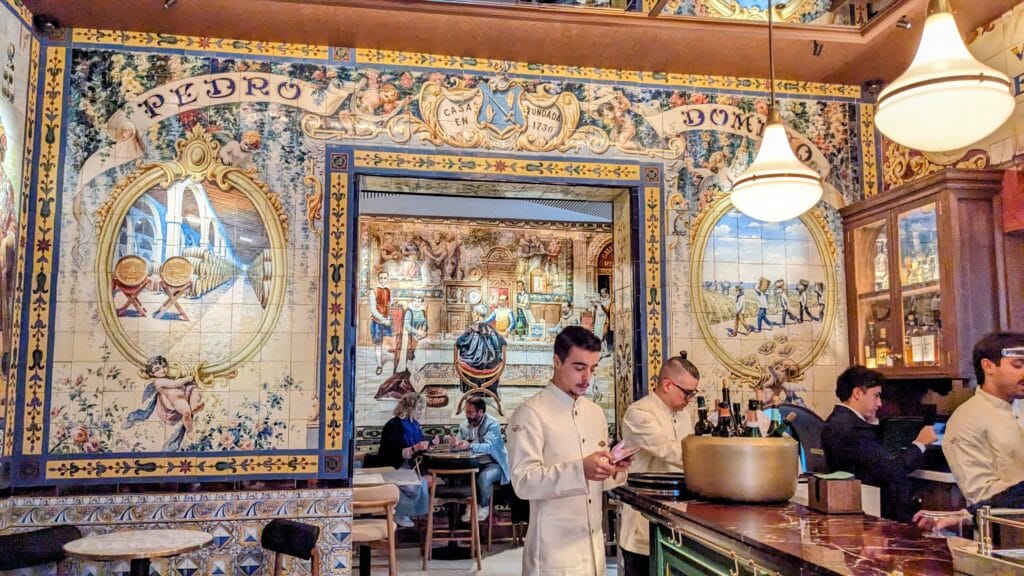
Los Gabrieles on Calle Echegaray, right in the heart of Barrio de las Letras (Madrid’s literary quarter), was a fixture of Madrid’s bohemian nightlife ever since it first opened more than a hundred years ago. For nearly a century, it drew in bullfighters, flamenco artists, intellectuals, aristocrats (it’s rumoured the naughty Alfonso XIII dropped in) and the odd Hollywood legend; Ava Gardner, who was famously mad about flamenco, was a regular, as was the eccentric playwright Valle-Inclán.
It was the kind of place where the city’s wildest and most interesting people ended up in the wee hours, and where something always seemed to be happening. Then in 2003 it closed, and stayed closed for over twenty years.
Why So Long?
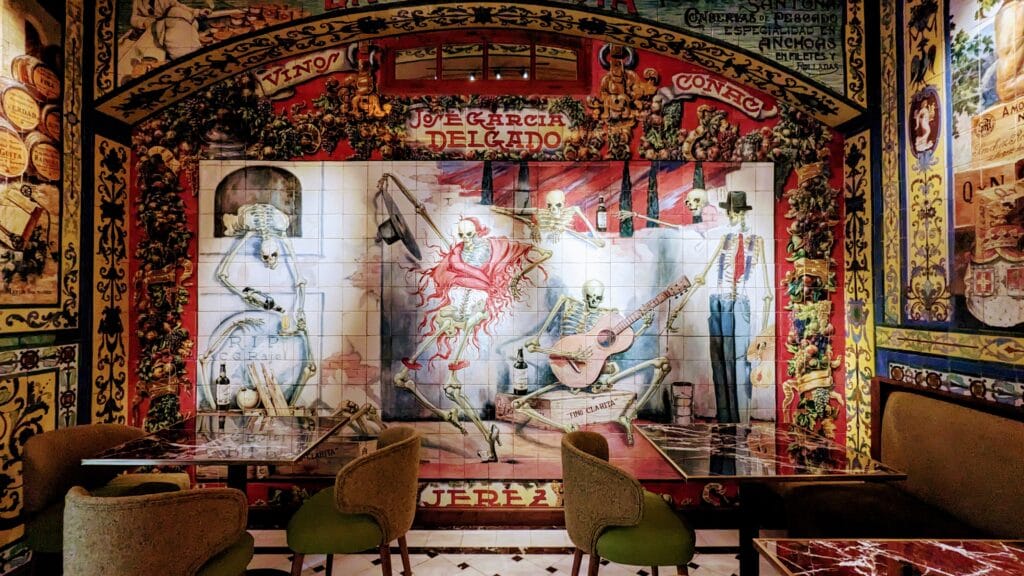
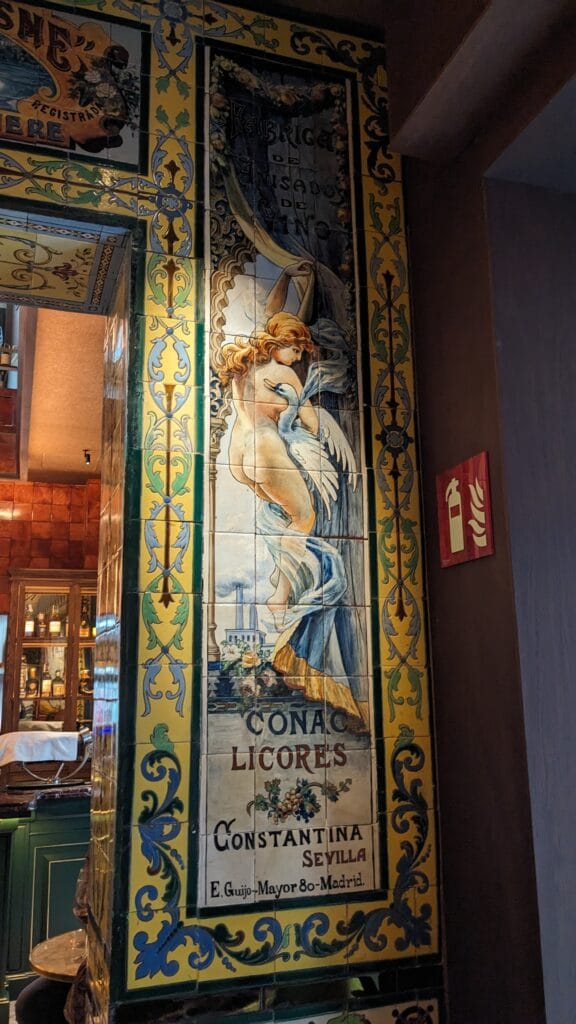
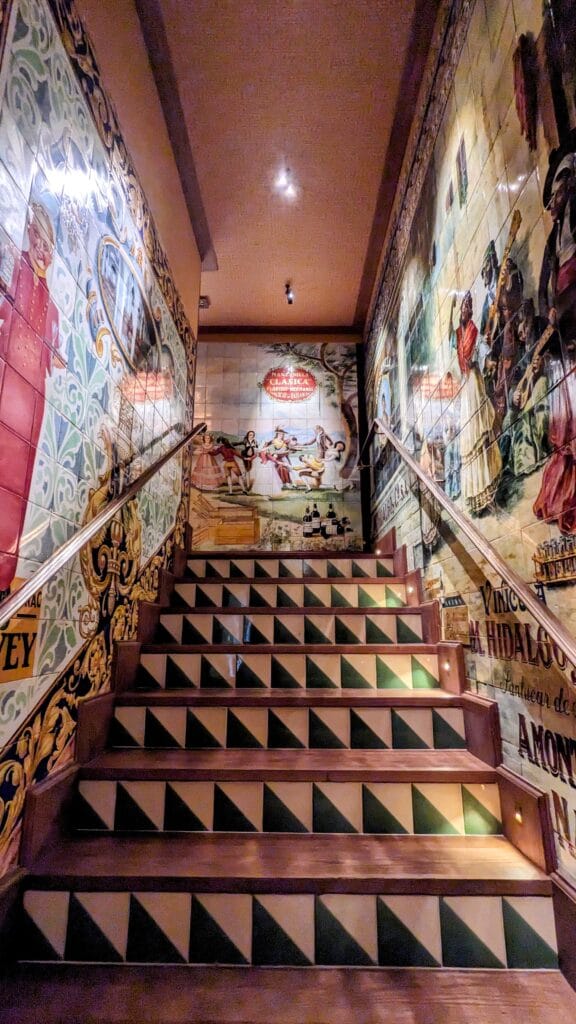
Los Gabrieles is classified as patrimonio cultural — a heritage property — which means that anyone taking it on had to conserve every single one of its extraordinary ceramic murals. And extraordinary really is the word. The walls are covered floor to ceiling in hand-painted tiles from the 1920s (for more on this movement, check out my post on the golden age of ceramic art in Madrid). The building, however, had become structurally unsound. To carry out the renovation, every tile had to be carefully removed and put back. Every. Single. One. It took years to find a company willing and able to do it, and years more to actually get it done. But they got there. And the result is breathtaking.
From the author
Want to escape the tourist crowds?
My ebook Quiet Madrid reveals the tranquil spaces and hidden places that most visitors never find — five neighbourhood walks, insider timing tips, and a Lonely Planet writer’s years of local knowledge.
Get your copy — €15 → Interactive ebookThe Skeletons
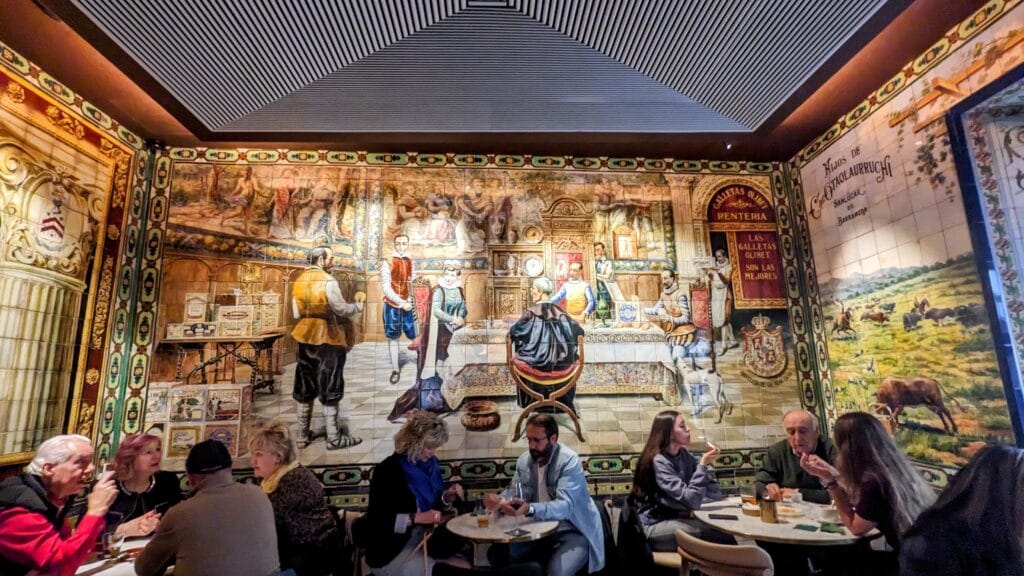
The image most people associate with Los Gabrieles is a mural by Carlos González Ragel, an artist known for his darkly comic skeleton scenes. In this one, the skeletons are having the time of their lives — or, well, their deaths — dancing, drinking and carrying on. It is macabre and joyful in equal measure, and it perfectly captures the spirit of the place. When you go in, ask to be seated near the skeletons. You will not regret it!
Elsewhere on the walls, you will find a recreation of Velázquez’s Bacchus — you can compare it with the original up the road at the Prado — along with a remarkable concentration of commercial tile art from the period. Several artists worked on the space, making Los Gabrieles the most complete surviving example of this craft in the city. Some have called it Madrid’s Sistine Chapel of tile art, and once you are inside, that does not feel like an exaggeration.
What to Eat and Drink
Los Gabrieles has relaunched as a high-end traditional Madrileño bar, so it is not the cheapest night out. Considering the high cost of the renovation, this is fair enough. The menu leans towards classic traditional Spanish cuisine: callos (tripe, a true Madrileño staple), croquetas, tortilla — a lovely runny version, which, when I visited, the waiter mentioned was his personal favourite — and patatas bravas. BTW, the mussels, marinated in a delicious sauce, are well worth ordering!
If you are watching the budget, visit outside of meal hours and order a glass of wine (around €6) and some bar snacks. You will still get the full benefit of the visual display without committing to a full dinner. Just bear in mind that you cannot book a table in the bar downstairs, so get there before around 1.30pm to be sure of a seat.
In the future, there’s going to be more in store with a restaurant upstairs and a flamenco tablao.
A Note on the Tiles Themselves
If Los Gabrieles sparks an interest in Madrid’s ceramic tile art — and it very likely will — you are in luck, because Madrid still has some classic examples from the era left, especially in the Malasaña neighbourhood. In fact, if you get my audio tour of Malasaña, you’ll go past some fine examples.
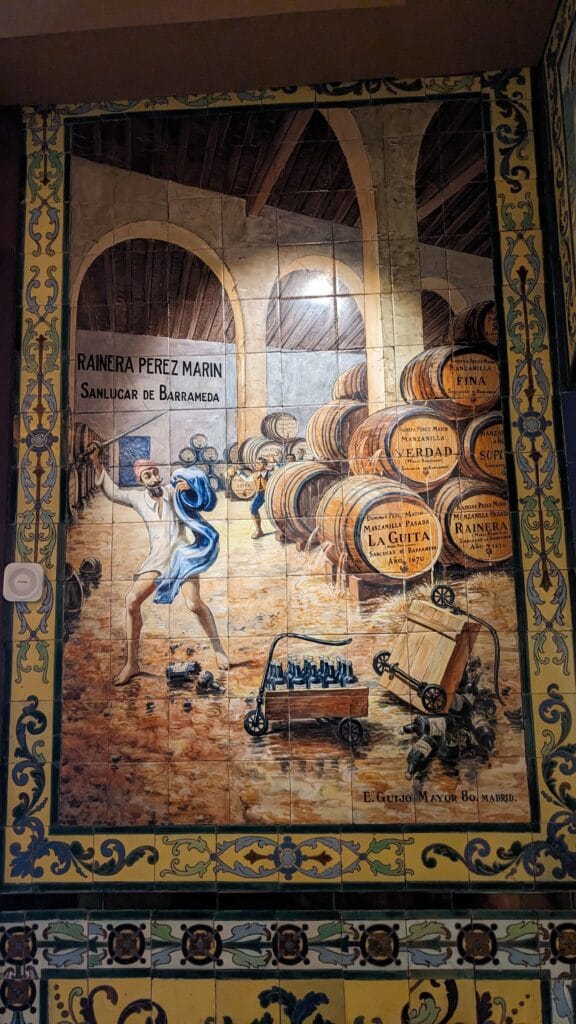
This art form had a remarkable renaissance in the 1920s, when artist Enrique Guijo brought tile-making techniques from Talavera de la Reina and began applying them to shopfronts, bar interiors and metro stations all over Madrid. Some of it has been lost — a Franco-era tax on exterior advertising led to a lot of it being plastered over — but a great deal survives if you know where to look.
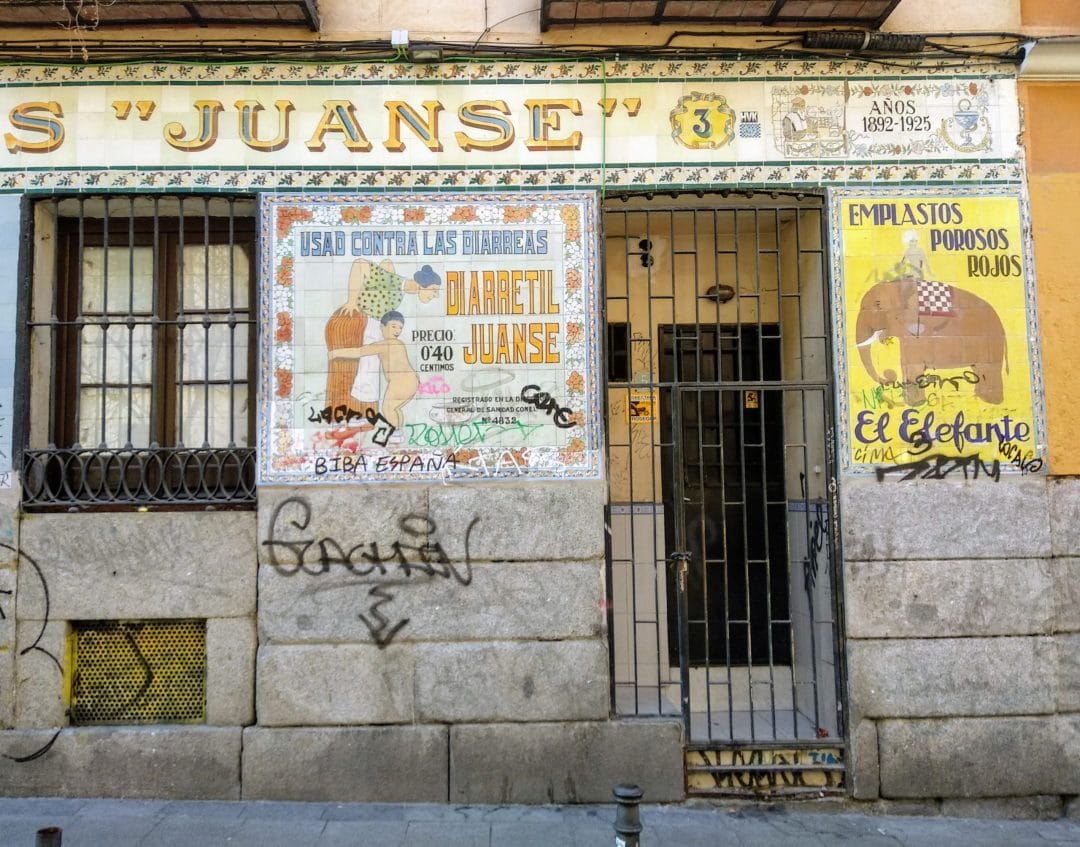
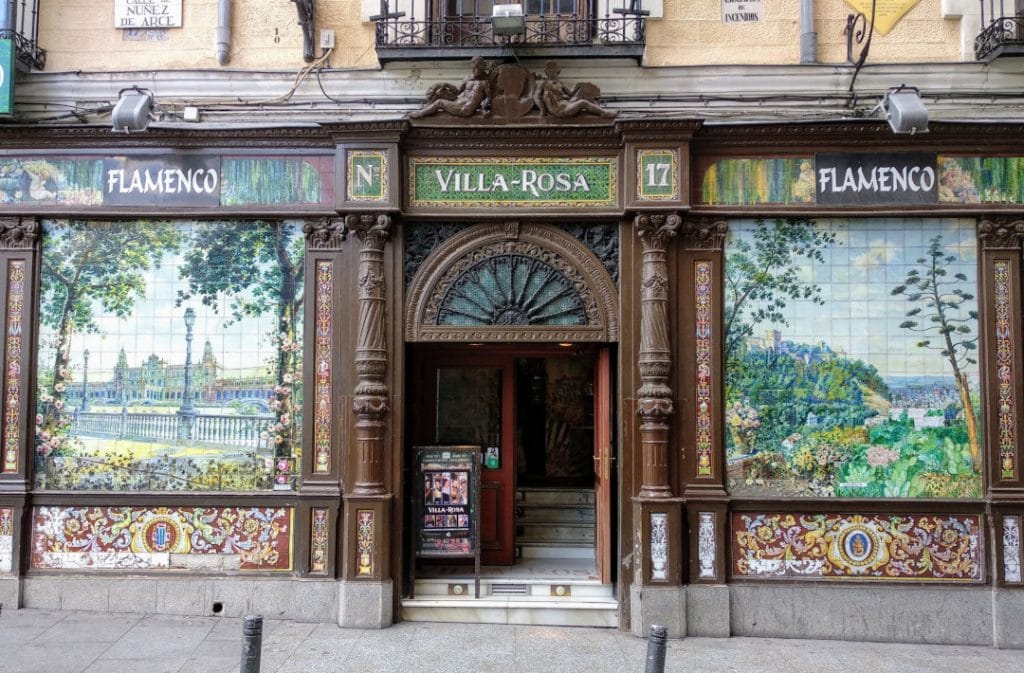
Nearby, Villa Rosa on Plaza de Santa Ana is another flamenco bar from the same era with beautiful tile work on its facade. Over in Malasaña, keep an eye out for the Farmacia Juance on Calle San Andrés, which has a wonderfully absurd advertisement for a diarrhoea cure rendered in hand-painted tiles — a baby, a potty, and a satisfied-looking mother. Exactly as good as it sounds. And if you want to go deeper, the Antigua Casa Talavera on Calle Isabel la Católica has been selling hand-painted tiles for over a hundred years; the fourth-generation owner is friendly, speaks English, and will happily talk you through the history.
The Basics
Los Gabrieles, Calle Echegaray 17, Barrio de las Letras. No reservations for the downstairs bar. Arrive before 1.30pm for lunch.