How healthy is the famous Mediterranean diet really? And where can you stay fit in Madrid without breaking the bank? In this episode, I chat with personal trainer and nutrition coach Marietta Sandilands about navigating health and fitness as a newcomer to Spain’s capital.
Marietta shares the surprising truth about changing dietary patterns in Spain, where to find the best fresh produce, and how Madrid’s incredible green spaces—from Casa de Campo to Parque del Oeste—offer free opportunities to stay active. We also discuss strength training basics, why even 15 minutes twice a week can make a difference, and how to adapt your fitness routine to busy Madrid life.
Whether you’re just moving to Madrid or looking to get healthier in the city, this episode is packed with practical tips on nutrition, exercise, and making the most of what this amazing city has to offer.
Topics covered:
- The reality of the Mediterranean diet in modern Madrid
- Best markets for fresh, quality produce
- Affordable fitness options and outdoor activities
- Strength training for beginners (it’s never too late!)
- Hidden green spaces and urban hiking routes
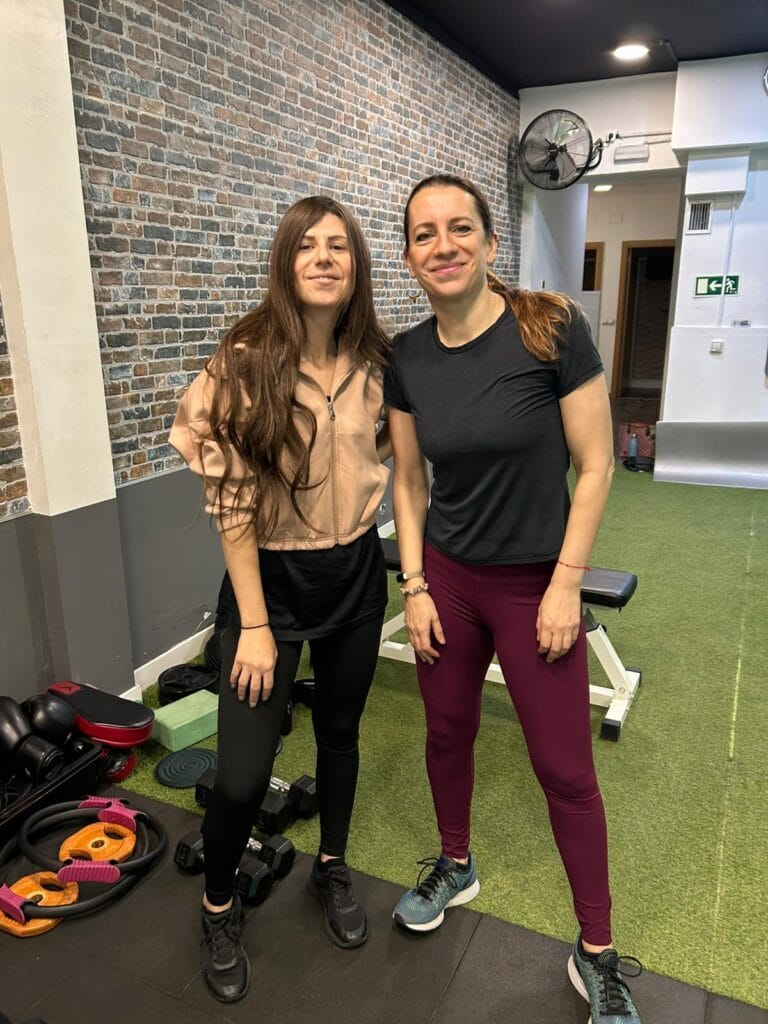
Guest: Marietta Sandilands, personal trainer, nutrition coach, and host of The Good Fit podcast.
Mentioned in this episode:
- Casa de Campo and Parque del Oeste for outdoor activities
- Cercedilla for accessible countryside walks
- Casa Fidel restaurant in Malasaña
- Local markets vs. supermarkets for produce
For more Madrid tips and hidden gems, visit themakingofmadrid.com and subscribe to the newsletter for your free copy of “.”
Episode transcript
Speaker 1: Hello, welcome to the Making of Madrid. My name is Felicity Hughes and I’m a journalist and tour guide based in Madrid. You may have seen my name on the Lonely Climbing Guides which I work as Chief writer for. Today’s episode is about fitness in the city and my guest is a personal trainer and nutrition coach Marietta Sandiland. But before we dive in I’d like to say that the Making of Madrid is an independent podcast.
I don’t do affiliate links or run ads and anything you hear that might be an advertisement, those profits don’t go to me, they’re put on later by Spotify or Apple. The way I keep things going is that I sell audio tours of the city on the voice map and there’s a book called Quiet Madrid all about the hidden spaces and tranquil places in the city or indeed you can leave a tip. And that’s all on my website, themakingofmadrid.com and if you go there you can subscribe to my newsletter where you get a free copy of Madrid Beyond the Guide book with that.
So that contains all the places that I wasn’t able to include in the Lonely Planet Guide because they’re outside the official boundaries that Lonely Planet uses but they’re really worth seeing if you’re on a visit to Madrid. So without further ado let’s get into today’s episode. Hi Marietta.
Speaker 2: Hey Lissy, thanks very much for having me on today. How are you doing?
Speaker 1: Good, good, good. How are you? I’m excellent, thank you very much. I just realised that you’re an old hand at podcasting because you have your own podcast called The Good Fit.
Speaker 2: Can you tell me about that? Yeah, just well the idea is it’s a short and quick and hopefully helpful episodes on things that questions that I get from people. So and I love researching all of the evidence based behind the approaches that I use so it’s that kind of translating the evidence to useful actionable things.
Speaker 1: Mm-hmm and you work as a personal trainer and nutrition coach so can you explain a little bit about what sort of service you offer to clients?
Speaker 2: Yep, so I am indeed personal trainer so specialising in strength training so that’s lifting weights and before I was in Spain I used to work in the health service in the UK in psychology teams so I have a degree in psychology so I bring the kind of psychology behaviour change side combine it with personal training and then I have some nutrition training as well bring all of them together and then help people do things like start lifting weights, keep lifting weights like have a consistent workout routine that they’ll stick to and enjoy and help people when they’ve got a goal to get healthier, tone up so basically losing a bit of weight and building muscle so yeah.
Speaker 1: And most of your clients are based here in Madrid?
Speaker 2: They’re all based here in Madrid, yeah.
Speaker 1: Okay, so where can people find you if they want
Speaker 2: to sandielands.com and then on Instagram and that’s probably about it you might find me on Facebook as well but that’s about it at the moment and the podcast as well so that’s on Spotify
Speaker 1: and Well that’s quite a few places. Anyway so what I wanted to do in this episode is talk a little bit about you know the cover subjects that people maybe moving to Madrid or living here might have you know questions about life in Spain and I thought I’d kick off with a question about nutrition because you’re a nutritionist. Spanish people famously have the highest longevity in Europe people put that down to the Mediterranean diet but I have my doubts about that because I’ll see a lot of fried food being eaten which is croquettes, patatas bravas, deep fried potatoes, lots of meat particularly pork. So what do you think of the Spanish diet?
Speaker 2: Yeah I mean I guess if we’re talking about the Mediterranean diet as in the stricter sense so plenty of fruits and vegetables and legumes and like fish, nuts, olive oil I think you know things are definitely changing and you can see I was actually looking at they do kind of periodic studies here so there’s a study of the Agudalda study in 2023 which shows yes the consumption of all of these kind of things are going down so like 11% less like vegetables, 15% less fruit, less legumes like chickpeas and beans and things being consumed so and I mean I guess it’s not surprising in terms of people have less time, less money, all of the things that are kind of associated with it’s not just a dietary pattern it’s the time that people had to kind of sit down and like have like spend time kind of creating their lunch or their dinner so I think it kind of reflects changes in society but I think this I mean there’s still when you see if I compare my life in the UK working the NHS a quick like lunch nipping out to Tesco for half an hour to lunch here people do some people can still get kind of longer time for lunch I think it really it really depends and I think it was something I was surprised by when I first moved here in the first year eating a lot of tortilla things like that because I was like where’s all the Mediterranean diet but I think it takes it’s partly there’s an adaptation as well of knowing where to find those things and having the time
Speaker 1: yeah I think that if I eat Spanish food at my mother-in-law’s it’s really healthy and they would have lots of fruit after the meal and then but if I’m in a bar it’s completely the opposite
Speaker 2: yeah exactly and it’s I mean we is also you can see the stats around things like obesity changing here in Spain and you know rising levels and actually particularly in teenage girls that’s the fastest kind of rising level reflecting like greater use of screens like more sedentary times so there’s all of these societal changes that are then reflected in what we eat and why we do what we do and definitely for bars it’s kind of cheap and quick to have this sort of you know like industrialized croquetas you can quickly like whack in the fryer and serve to people
Speaker 1: what about if you want to eat healthily in Madrid what tips do you have for people um
Speaker 2: I’ve had eating healthily in Madrid it’s I mean it’s for me when I I think like I said when I moved here it was a challenge of I was used to going to the supermarket in the UK and kind of knowing where to find all of the things that I cooked with or you know you’d have lots of aisles of I don’t know like Indian food or whatever it was that you I was I was used to cooking in from scratch in a certain way moving here I had to adapt and kind of go what do I cook like I couldn’t just translate exactly what I did there to here so it was partly I remember going to lots of like I would go to the local markets and people are pretty friendly here I could like ask I was like how do I cook this or what do I do with this so partly getting to know how people eat here asking people questions and if you like cooking from scratch then you know finding you’re finding you know where can you find those ingredients basically and and it’s like the Mediterranean diet kind of diet as a like dietary pattern if you follow that you’re going to be pretty healthy in terms of you know you’re getting plenty of fruit and vegetables like lean protein so kind of not fatty meat not large amounts of alcohol and things like whole grains legumes so beans and lentils so having that as a general idea is pretty healthy and associated with loads of things like kind of lower charts of type 2 diabetes and cancers and things so
Speaker 1: yeah I totally back up that thing about the market I love the fruit and the quality of fruit and vegetables is amazing in the local markets the interior to the supermarket which can be a bit bland
Speaker 2: yeah it’s very I think I find the the supermarket’s really variable and you know some supermarkets are good for some things others not for like other things like personally I prefer dia is really good for fruit and vegetables compared to the kind of one that everyone loves macaroni but and the certainly in the markets as well you get you can get some amazing deals and just like the joy of chatting with people there you know maybe being called arena when you’re going to buy your like fruit and vegetables so yeah you get that added touch that you’re not going to get in the supermarket
Speaker 1: they call you rena which means by the way anyone who doesn’t know it
Speaker 2: but just it’s that joy of kind of it these little things cultural differences that remind me of you know different things compared to the UK so yeah
Speaker 1: well let’s move on to general fitness have you seen the culture around fitness change in the city over time because how long have you been here now
Speaker 2: I’ve been here 10 years and yeah it’s I mean I would say the culture around fitness it’s I’m when people come to me and ask about personal training one really nice thing that I see is women knowing a lot more about the benefits of strength training lifting weights so instead of people kind of saying I want to do this to lose weight people are saying I know I need to do this because the benefits for building muscle building strength longevity so in terms of more I suppose societal trends that’s is big in the UK and kind of big here as well strength training so that’s a trend I’ve seen but culture around fitness um I don’t know I mean I would ask you that as well if like there’s something that you what like your thoughts on it and I don’t know if there’s things that you’ve seen that’s the big thing that I feel like I can notice people knowing the benefits of strength training yeah
Speaker 1: yeah I just started I attended one of these Kubo hymnazio sessions that’s run by the local council and I think they’ve also got on to the fact that strength training is important and it’s offered to people of all ages but it’s mainly middle aged women and above yes perhaps was a little underserved before I don’t know yes I think there’s a lot of um
Speaker 2: I think of things like Pilates promoted to women and Pilates is all well and good but actually there was that missing piece for me around building strength and muscle and those Kubo hymnazios are like amazing ones where you are you talking about the ones that you see in the park for example and yeah all around the city yeah they’re incredible unbelievably cheap and like just really they look so fun
Speaker 1: okay yeah just three euros for a session you can drop in whenever you like which is amazing I’ve only been once because they didn’t do it outside it was too cold I’ve got to go back
Speaker 2: yeah I’m sickly raining at the moment it’s not raining but it does look really great there’s only a good gathering there like great idea
Speaker 1: that brings me on to the next question which is how are the facilities both public and private?
Speaker 2: facilities. So in terms of public ones, I suppose I visited quite a few gyms and been with friends or been with people I work with and there’s some amazing public ones like there was one in Quachacraminos, the Sport Raid that took quite a few years to get going and but it’s incredible. It’s like the dream gym for me. There’s immaculate equipment, there’s kind of a terrace space outside, plenty of weights, swimming pool, great space and then you’ve also got another facility in La Latina, La Febada by the market there.
Yeah, it was maybe three or four years ago. Another great space and they’ve got a really cool kind of weight, I suppose cross-fit type area on the roof, running track. So yeah, you’ve got this and really there are some incredible public gyms like a dream about that Quachacraminos gym regularly and then there’s also and private ones they vary from if you just want a kind of does what it does, what it says on the tin type basic fit or Viva Gym but or if you want places like those personal training studios where I like train people at personal training studio there’s also gyms as well, there’s one I go to called Functional Feel, they’ve got gyms in Chambere and Tricor. There’s a real mix, it depends what you’re looking for, more basic facilities, bit of a like gym vibe.
Speaker 1: Basic fit seem to be doing incredibly well right now because I see their gym bags all over town.
Speaker 2: Yeah, excellent marketing, see them, you spot a funnish person traveling with like you know the basic fit, more chillers, so is smart marketing on their part as well because you get that when you sign up.
Speaker 1: Yeah, you get a basic fit rucksack.
Speaker 2: Yeah, exactly but it’s great in terms of like they’ve got a huge one on in Crayatoccia which is one of the ones that I’ve been to where you just have just huge amounts of equipment. It’s really handy because sometimes in the smaller gyms it can be harder to get onto bits of equipment but it’s worth you know lots of gyms have day passes but you can go and you can check it out and I’d recommend that to kind of see what it’s like, see what the facilities are like, how well maintained the equipment is, things like that.
So if they have got a day pass and sometimes like in the La Bala gym I think it’s about five euros so it’s worth it just to see is it convenient like from where you live and what do you think of it? Yes, good tip.
Speaker 1: The other topic I wanted to do was hiking, walks and running. So what sort of routes do you recommend? Could you recommend us? I don’t know maybe two or three different routes that you think people would enjoy.
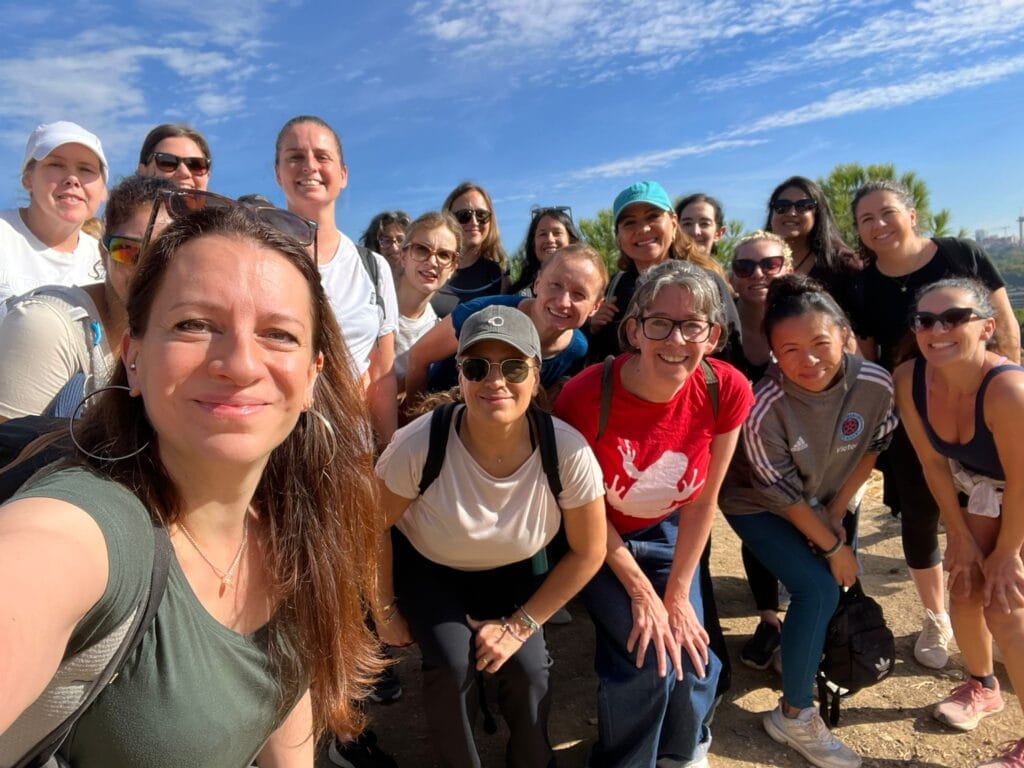
Speaker 2: Yeah, so on walking actually I’ve been trying to think how long ago it was maybe a year and a half or so. I started a walking group and the idea was get people out on Saturday morning generally into the beautiful like parks of Madrid maybe spaces they haven’t seen before, get your like a decent amount of steps in and just get together basically and it serves that purpose of exercise and in nature and I don’t know it can be quite a it can be tough like living abroad and living away from home can be quite transitory sometimes in terms of people you meet and I think I just wanted to make a space where people could get together and do something that’s not necessarily about like eating and drinking. Those things are important and fun recommended too but getting out basically for a simple walk and there’s two routes I do two routes more or less.
Speaker 1: Yes, I’ve done one of them and I have to say I couldn’t believe that we could walk so far in a green space in the centre of the city it was amazing.
Speaker 2: Yeah, okay so that was actually that was like a bonus walk I think you did the one from so normally I do one that goes through we start at Platte Espana and then we go through like Templar de Libos and Parque Hueso and then have a coffee at the end of it and there’s a wonderful little stream in Parque Hueso that just makes me happy walking past it and seeing all the dogs there as well and then the other route I do is start at Platte Espana and then going through Campo de Morro to Lago so you get into the Campo and those are two if we just want to do like under an hour those walks are great they’re short and you get to see like parts of Madrid you might not have seen and realise how you can kind of get out to nature really easily and the walk that you did was that long which I was like well anyone want to join this but that was
Speaker 1: like it was a trek
Speaker 2: yeah that was like three and a half hour walk from where did we start? Did we start at Platte Espana or start at Montclois? Montclois and then went through Parque Hueso and all through Casa de Campo which is I just love it and when you’re in the middle of Casa de Campo and it’s just it feels so wild and beautiful and I was really I love the idea of like a little without sounding like you know too insufferable but a little urban hike through the city basically and how easy it is to get out into these spaces without having to drive out of the city basically Casa de Campo when you’re in the middle it’s like can’t believe we’re so near the center of the city but it’s
Speaker 1: beautiful Well they’re so lucky because the Casa de Campo actually has rabbits and they think there’s even deer out there
Speaker 2: There’s sheep there as well I mean it’s sort of something for everyone so yeah
Speaker 1: And is there a countryside possibly would you say Sertedía? Roots for a bit. Yeah
Speaker 2: I think possibly the if you’re looking for a walk to do this accessible by public transport Sertedía is they’ve got various different long or shorter routes but that’s probably one of the closest to Madrid and easiest to do public transport wise I mean there’s plenty of hiking groups where they organise walks kind of further out in the sierra but yeah I leave that to other people much more expert in that than me so
Speaker 1: yeah I think there are meetup groups that you can find that where you can go out walking with a mixed crowd and Spanish people might want to practice their English and vice versa so it’s also a good way of meeting people too right?
Speaker 2: Yes exactly possibly you know known for their like dating priority and potential too so I think Oh are they quite flirty?
Speaker 1: I mean that’s what that’s what I’m told that’s what I’m told so yeah I think it’s and it’s just a nice way to to get out with people where you’re doing something but not you know going out for a meal or yeah okay fabulous
Speaker 1: well is there anything else you’d like to add on the topic of fitness in Madrid?
Speaker 2: God bless to you putting me on the spot anything I’d like to add I think I’m just so I did a short talk like recently and it’s really interesting where people ask questions because you see what people really have questions about in a wondering and someone said to me that they only have time for example like twice a week to work out and is is there still any point to doing that and I would say you know absolutely there’s some really cool studies actually there’s one that I can share with you and put in the notes if you wanted that shows the strength gains basically the people made from working out three times a week for 15 minutes using band and body weight exercises so okay it depends where your starting point is but we have studies like that we have I mean there’s a general comment like the first hour of exercise you do is going to have the biggest thank you but so I would really encourage people with whatever time that they have to kind of yeah to think there is a point to it and that’s what I like doing with people working out with them how we can make fitness fit into their life if they’ve got 25 minutes we’re going to work out a routine that fits for that rather than going you’ve got to go to the gym for like an hour and no it’s really about adapting to your life and so I would really I think that’s an important message for people and strength training as well is it’s different to things like Pilates in that we are we’re lifting weight which is causing adaptations like building muscle and it’s a progressive thing over time so we’re upping the challenge so upping the weight or upping the reps that we’re doing so that’s an important goal that we’re moving to but it’s all about I think finding the yeah the program the way of incorporating it into your life so you can work towards that and if anyone hasn’t tried strength training I would urge you to give it a go because it’s it’s it’s not something I like discovered until I turn 40 and it’s never too late we can still build muscle into our 60s into our 70s and it makes you feel great I so
Speaker 1: yeah yes I’m on the bandwagon I’ve just good my five kilo weights
Speaker 2: so excellent good good good
Speaker 1: to wrap up I always ask people to tell me about their place in the city and their favorite Spanish word so what’s your favorite place in Madrid
Speaker 2: favorite place I suppose so thinking about maybe favorite I’ve got a few favorite restaurants I get think of places like Casa Fidel in Malasania where they do like an extant Manu del Dia places like Rebebele Muno which is a Galician seafood restaurant in Malasania as well two happy places and also I guess just places like I just love it going out to the park part of Westy or Casa Campo definitely those places it doesn’t matter how many times I go or even to the temple of the the Bodh seeing that view across the city you know I’m always stopping when I got out with a group and just like look at this it’s so nice
Speaker 1: so yeah we’re so lucky to have so much green space in the city yeah
Speaker 2: exactly it’s funny you mentioned Casa Fidel because I just wrote a post on places I like a guide to Malasania and I added that one because the Manu del Dia is really good it is it’s great and they’ve been going a while and it’s yeah it’s still one of these places that persists where there’s a lot of change basically a lot of speciality coffee shops around but there’s still some places and also Rebebele Muno is a real like a gem that’s been there for generations so I recommend that place and your favorite Spanish word favorite Spanish word God bless you again putting me on the spot with this I’m just thinking I do a ridiculous web on the news when they there’s so much over focus on politics here in the news and the word rifiography that comes up a lot in the news is always makes me smile so I guess it would be that how would you translate that one again putting me on the spot how would I translate it yeah because it doesn’t translate directly it’s a more yeah I don’t know what would you say how do you translate it it’s kind of like bit of a bit of a frack or okay yeah would you say that I don’t know I’m trying to think how it’s that kind of that disagreement in in the senate like there’s a bit of both like a pocket off yeah I love how we’re using French words to translate this in the show yeah
Speaker 1: that’s a joy of learning a new language you have new ways of expressing yourself and new concepts yeah okay well that all about wrapped everything up if you want to find Marietta and hire her you can find some links in the show notes and thank you very much for coming on the podcast
Speaker 2: thanks very much for having me it’s lovely to chat bye