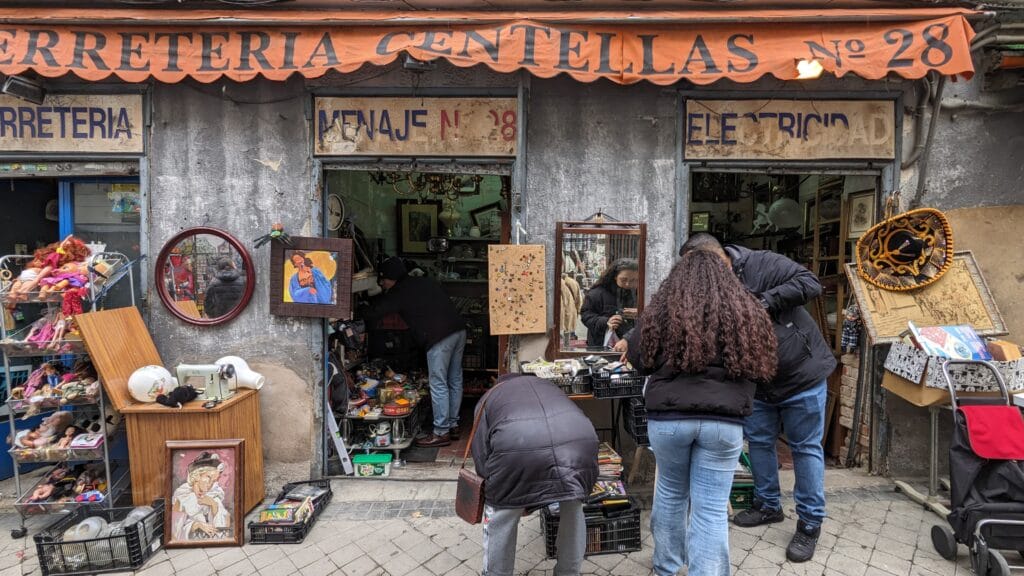
Tumbling down the hill in downtown Madrid, El Rastro flea market is chaotic, historic, and endlessly entertaining. So if you’re planning a trip to Madrid, I’d put it right up there alongside the Prado as one of those experiences you absolutely can’t miss (for more on getting the most out of a short trip, check out my 3-day itinerary). But how to tackle the beast of a market? In this complete guide to El Rastro, I’ll share everything you need to know to get the most out of your visit to this iconic Sunday institution.
A Brief History of El Rastro
El Rastro is Madrid’s oldest flea market, with roots stretching back before Madrid even became Spain’s capital in 1561. The name comes from the bloody trail (rastro) left by animals being dragged from the slaughterhouse in Plaza de Cascorro down the hill to the tanners’ workshops in the Ribera de Curtidores. The informal market that sprang up in those times grew to sprawl through the surrounding streets. Unlicensed traders hawked their wares here freely until regulation in 1811, but despite stricter rules, it has retained its anarchic castizo (truly Madrleño) character.
How to Navigate El Rastro
With over 3,000 stalls sprawling across the steeply sloping Embajadores district (which includes Lavapiés), El Rastro can feel overwhelming. But you don’t need to see everything to enjoy it. For first-timers, I suggest you give yourself three hours and factor in some downtime to catch your breath, as the crowds are quite something! Once you’ve been, you’ll find it addictive: I live nearby and pop down whenever I’m stuck for something to do on a Sunday morning, just to soak up the atmosphere. Obviously, you might not have this luxury, so here’s a guide to help you get the best out of it on a single trip.
Start at the Top
The market sits on a hill between four metro stations: La Latina, Tirso de Molina, Puerta de Toledo and Embajadores. I’d strongly recommend starting at either La Latina or Tirso de Molina metro. These drop you near Plaza de Cascorro at the top of the market, which means you don’t have to struggle through the crowds uphill. The other two are at the bottom of the hill so you will need to climb to check things out.
The Main Drag and Beyond
Plaza de Cascorro swirls with the densest crowds, gathered around the monument to Eloy Gonzalo (a local “hero” fighting for Spain in the Cuban War of Independence who rather questionably set fire to the Cuban village of Cascorro in 1898 before Spain lost Cuba entirely). From here, the main street – Ribera de Curtidores (Tanners’ Road) – plunges steeply downhill.
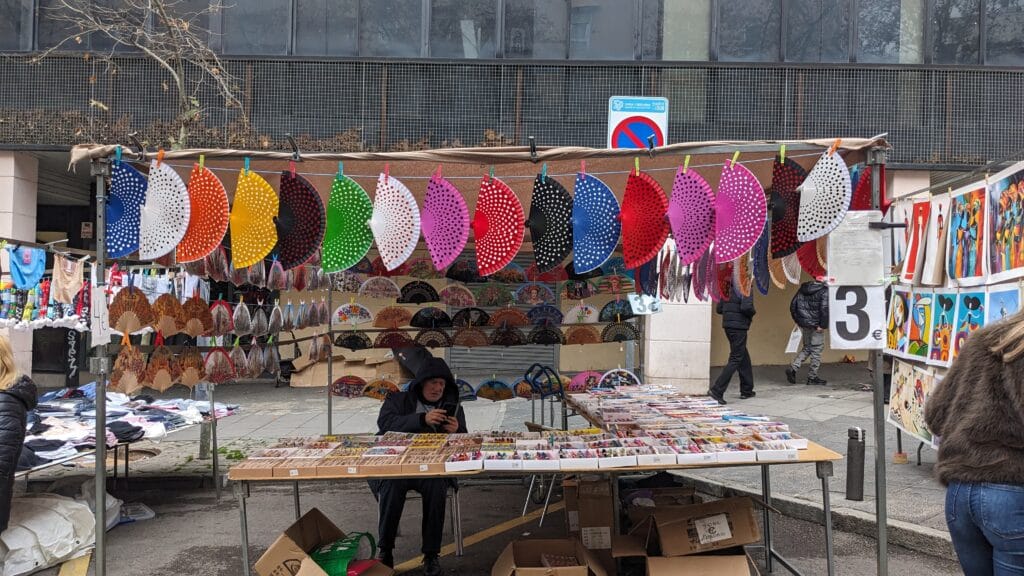
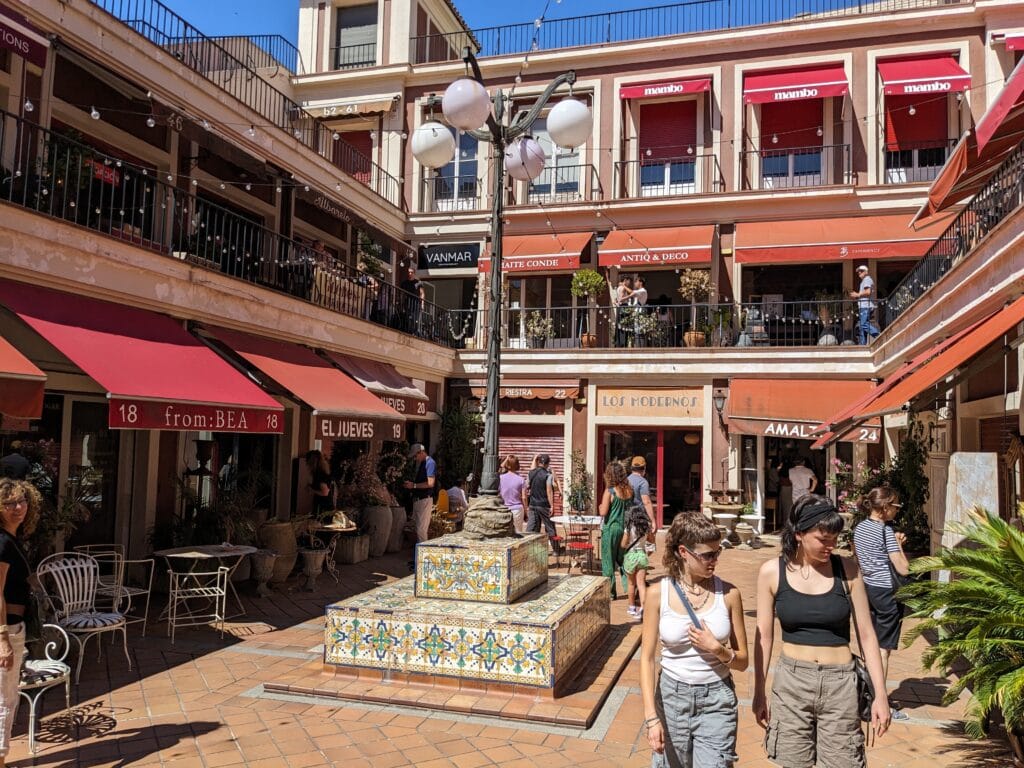
Along this drag you’ll find leather goods, new clothes and tacky souvenirs: Spanish fans, and the like. Halfway down, duck into the Galerías Piquer – a lovely building arranged around courtyards with ceramic benches – opposite is another Galería, which you shouldn’t miss if historical Madrid is your thing. This is where you’ll find proper antiques and can actually catch your breath. These galleries are also open during the week if you can’t make it on Sunday.
I advise veering off the most popular drag of the Rastro by turning down Calle de las Amazonas. Along here, you’ll hit Bar Santurce on your right – a local institution with a famously grumpy owner serving calamari, padrón peppers, and cazón (deep-fried dogfish).
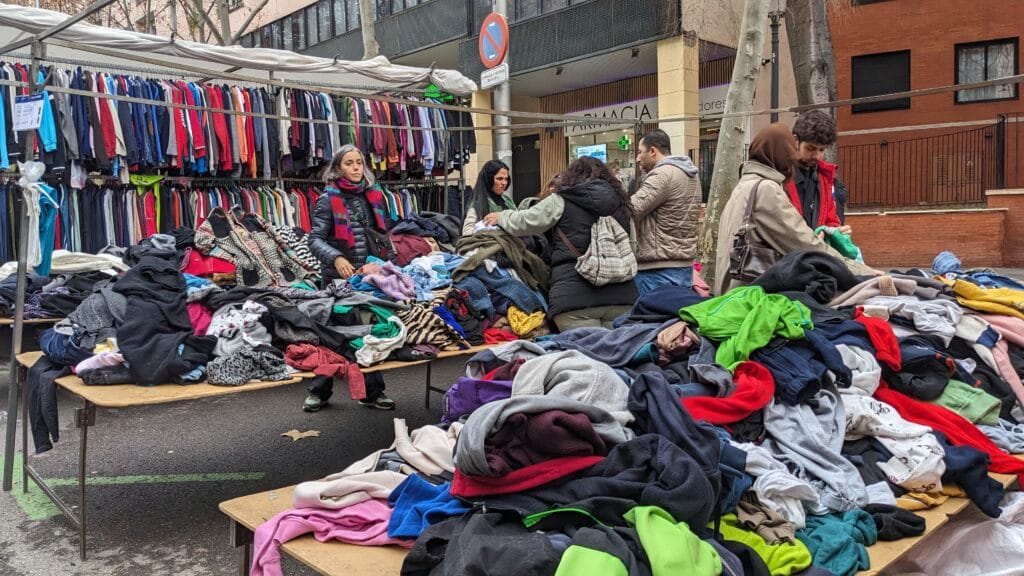
Carry on to Plaza del General Vara de Rey and you’ve found one of my favourite corners of the Rastro. It’s where they set up stages for summer fiestas, and it has this perfect mix of quality antiques and proper rummage tables where vendors shout “¡Chollo, chollo!” (Bargain!). The vibes are just fantastic.
Further down toward Puerta de Toledo metro, Plaza del Campillo del Mundo Nuevo offers a less touristy experience with old magazines, collectables, vinyl, and toys. Last time I went, with the 50th anniversary of Franco’s death approaching, one stall had a display of front pages from when Franco died – a fascinating glimpse into old Madrid.
What to Buy (and What to Photograph)
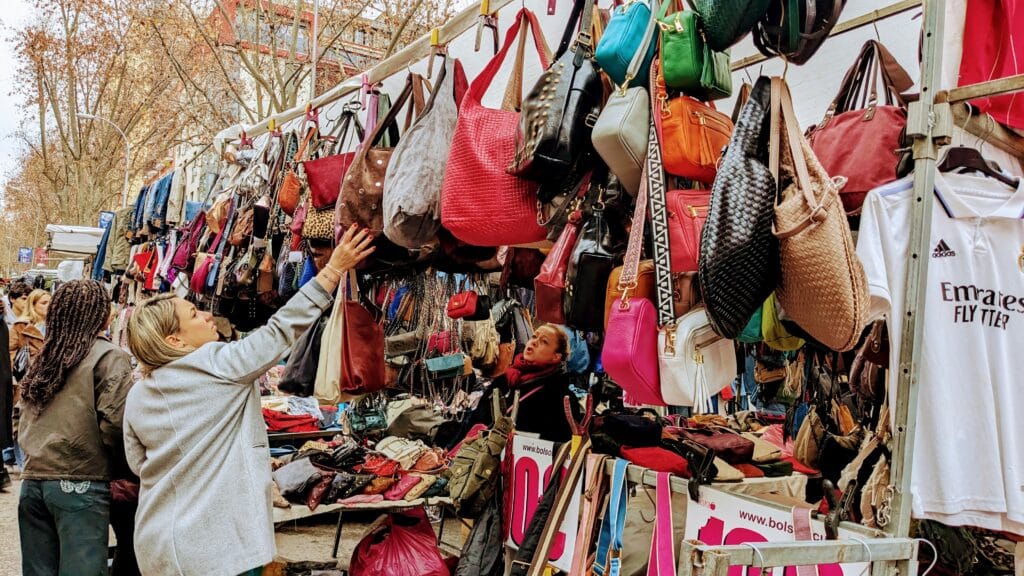
You’ll find everything from high-quality leather goods (the leather stores at the bottom of Ribera de Curtidores are a historical trace of the old tanners) to vintage frames, antiques, clothes, electronics, kitchen stuff, and everything in between.
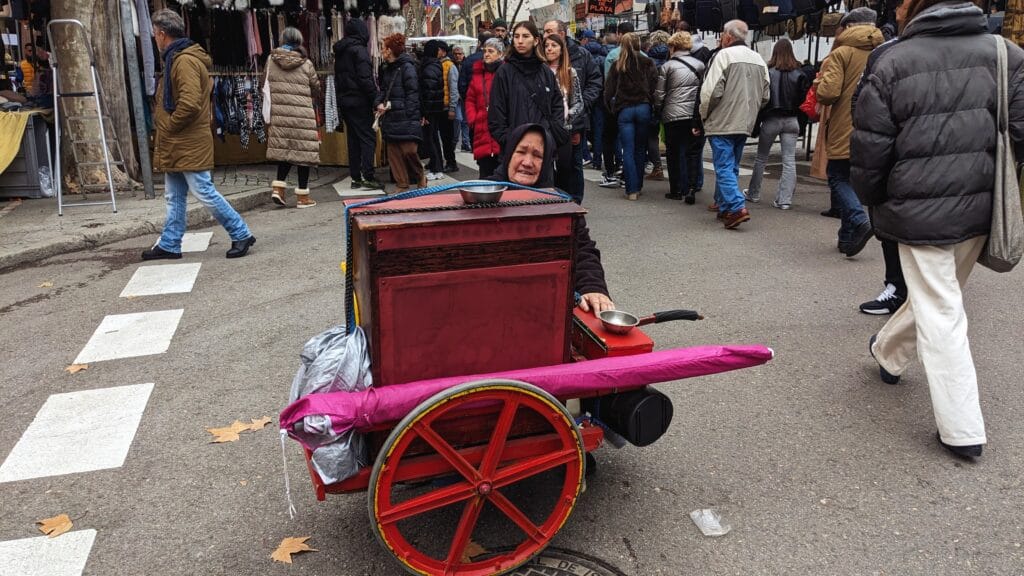
If you’re a photographer, there’s so much to capture. But be respectful and ask before photographing people. Do look out for the old lady with her barrel organ – she’s been there Sunday in, Sunday out, and I reckon we should support this little piece of Madrid history with a few coins.
A rough rule: the further down and out you go, the cheaper things get. This is actually true of all Madrid – I live in Usera, a few stops south from Emajadores, where a glass of wine costs me under three euros with a generous tapa; whereas in the city centre you’re paying over four euros for a negligible nibble.
Your El Rastro Questions Answered
What is El Rastro?
El Rastro is Madrid’s historic Sunday flea market – the oldest in the city – sprawling down the hill from Plaza de Cascorro through the Embajadores neighbourhood. With over 3,000 stalls, it’s a chaotic, colourful spectacle where you can find everything from genuine antiques to tourist tat, quality leather goods to vinyl records, vintage frames to electronics.
When does the Rastro open?
El Rastro operates every Sunday from 9 a.m. to 3 p.m. It’s a Sunday morning tradition for madrileños and visitors alike. Try to get there early if you’re after something special, as it gets stripped bare by professional antique hunters first thing. By 10.30am it will be too late for real finds, but you can still fully enjoy the spirit of the market nonetheless.
How do I get there?
The easiest metro stops are:
- La Latina (northwest)
- Tirso de Molina (northeast)
- Puerta de Toledo (southwest)
- Embajadores (southeast)
I recommend starting from La Latina or Tirso de Molina as they’re at the top of the hill near Plaza de Cascorro. You’ll thank me when you’re not battling uphill through the crowds!
Can I haggle?
Absolutely – and you should, haggling is one of the great pleasures of the Rastro! If the price isn’t prominently displayed, that’s your cue to start negotiating.
Useful phrases:
- “¿Cuánto cuesta?” (How much does it cost?)
- “Hazme una oferta” (Make me an offer)
Sometimes the seller will turn it around on you: “You tell me – how much do you think it costs?” This little back-and-forth is part of the charm, a pleasure you won’t find in other parts of Madrid.
Can I pay with credit card?
Very few stallholders accept cards, so bring cash. However, you need to be careful because the crowd is filled with pickpockets. Hold onto your purse or wallet tightly and stay aware of your surroundings. It’s annoying that you have to bring cash while staying vigilant about theft, but that’s the Rastro for you.
How long should I stay?
I’d recommend setting aside about 3 hours to properly explore. That gives you time to wander the main drag, duck down side streets, poke around the galleries, maybe stop at Bar Santurce for a bite, photograph the action and have a good rummage without feeling rushed.
What can I buy there?
The variety is staggering across those 3,000+ stalls:
- Antiques
- Vintage and secondhand clothes
- Leather goods
- Picture frames
- Vinyl records and CDs
- Books and old magazines
- Collectables and toys
- Electronics and phone covers (toward the bottom near Embajadores)
- Kitchen items, socks, underwear – basically everything at bargain prices
- New clothes and tourist souvenirs (along the Ribera de Curtidores)
The quality and type of goods shift as you move around. Ribera de Curtidores has newer goods and tourist items, while the squares like Plaza del General Vara de Rey and Plaza del Campillo del Mundo Nuevo offer more authentic rummaging experiences.
Are there any other flea markets in Madrid?
Yes! There are tons of different flea markets around Madrid. A couple are near my barrio (I live in Usera), and you can find all the same stuff as the Rastro, but for even lower prices. These other outdoor markets are also brilliant for cheap fruit and veg, though I’d advise hitting the more expensive indoor markets for quality, where the produce just can’t be beat, even if it costs a bit more.
For a full list of Madrid’s other flea markets, check out this link to find local ones.
Final Tips for Visiting El Rastro
Even if you don’t buy a single thing, the Rastro is a spectacle in itself. It’s got that authentic castizo flavour – real, old Madrid character that’s increasingly hard to find as neighbourhoods gentrify. Embajadores still maintains that working-class, multicultural vibe it’s had for centuries. So all that’s left to say is happy rummaging, and watch your wallet!
And if you’re planning your Madrid itinerary, think about getting a copy of my ebook Quiet Madrid to discover the city’s tranquil side, or subscribe to my newsletter for Madrid Beyond the Guidebook.