
Originally published 8 December 2025
As a tour guide and Lonely Planet guidebook writer, I’ve been pounding Madrid’s streets for more than a decade, exploring not only its busy grand boulevards but also its charming quieter corners. So I’m a good person to ask about accommodation options if you’re a first timer with only a few days to discover Spain’s capital – especially because I know the pitfalls that catch out visitors!
Right now, for instance, I imagine you might be scrolling through Booking.com entries, worried that you’ll wind up staying next to a brothel or looking out onto a motorway. So let me kick off by saying avoid Calle de la Montera, Calle Desengaño and anything near the M30 ring road! But where to stay to get the best out of Madrid beyond that? The good news is that the city is compact, so if you stay pretty much anywhere in the centre, most attractions will be walkable. However, prices here have been creeping up, so it’s handy to know that the city also has great public transport, meaning that options further out will work for those on a budget.
*To find out how to get the most out of a short trip to Madrid, check out my three-day itinerary.
- Map of the city
- My Top Pick: La Latina
- Barrio de las Letras: Madrid's Literary Quarter
- A Word of Caution About Lavapiés
- The Historic Center: Around Plaza Mayor
- Chueca and Malasaña: For Party People
- Why I Don't Recommend Barrio Salamanca
- Chamberí: My Alternative to Salamanca
- Beyond the Center: Budget-Friendly Options
- Final Thoughts
Map of the city
Before we dive in, let’s get oriented with the lay of the land.
My Top Pick: La Latina
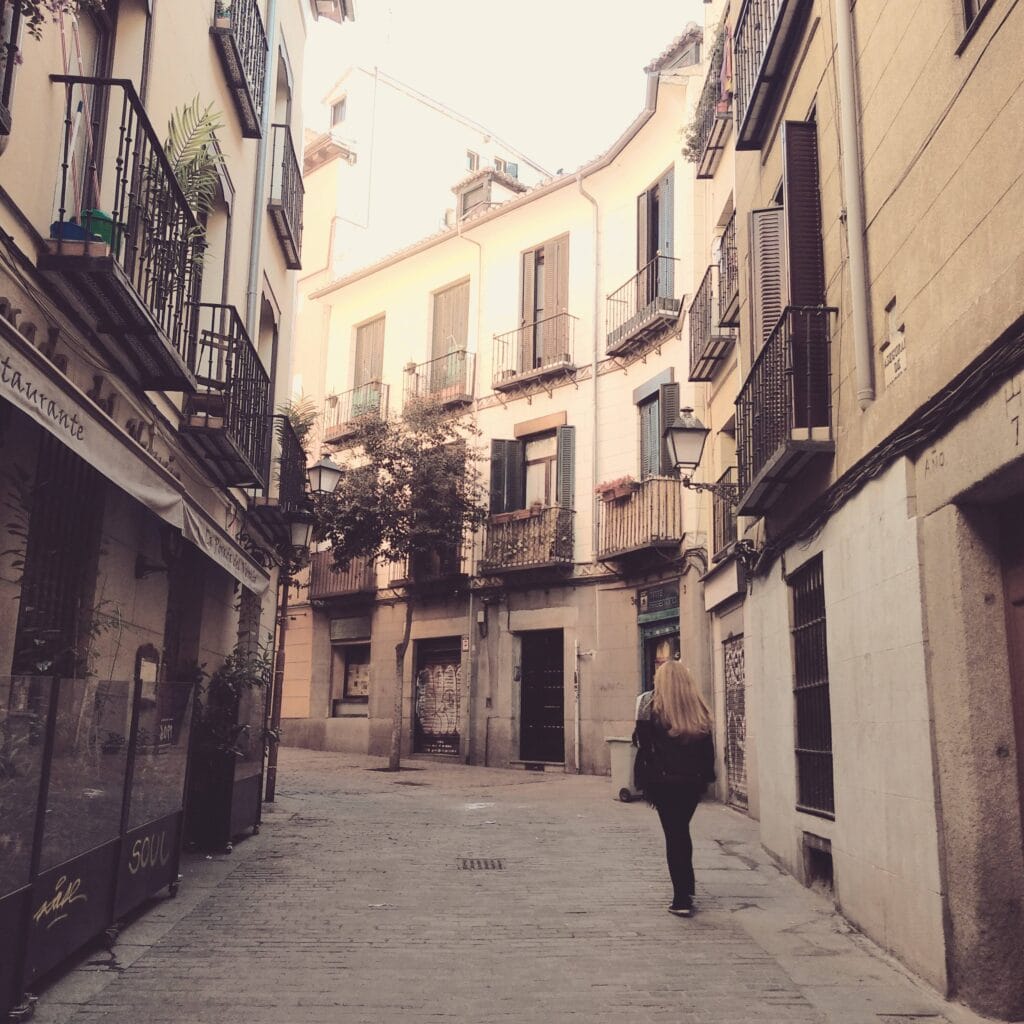
If I could recommend just one neighborhood, it would be La Latina. This historic district offers the perfect balance: central enough to reach major sites easily, yet quieter and more charming than the tourist-heavy centre. Even better, it’s the gateway to Madrid’s massive Rastro market that takes place every Sunday.
Why La Latina Stands Out
Built in medieval times when Madrid’s Muslim residents were moved outside the original city walls, La Latina’s history dates back to the 12th century. The neighborhood sits on a gentle slope, giving it character and stunning views from spots like the Jardín de las Vistillas, where you can gaze out toward the cathedral.
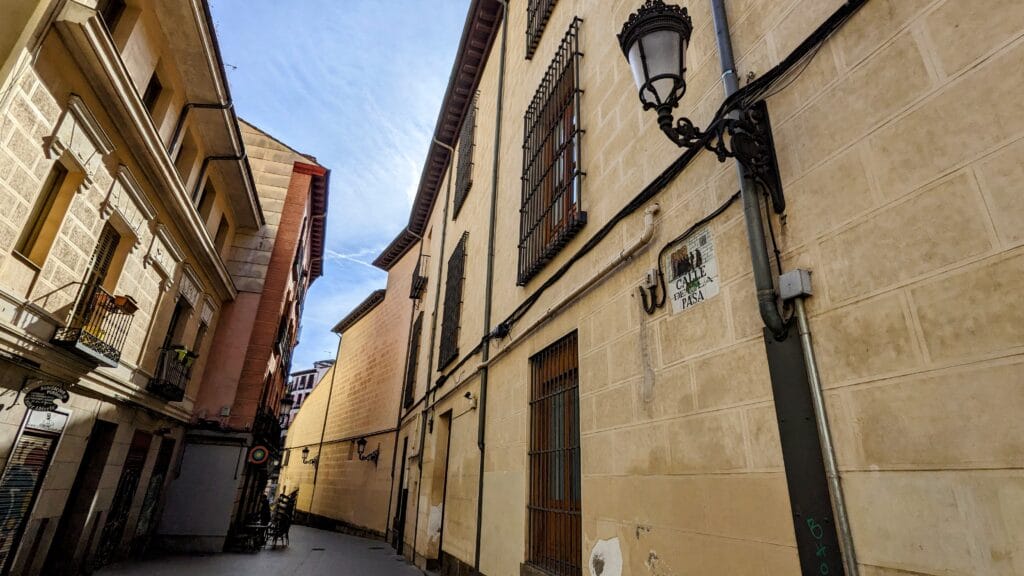
The heart of La Latina is Plaza de la Paja, a gorgeous square with a hidden garden that feels worlds away from the bustle nearby. But what really makes this area special is the architecture along Cava Baja.
The Magic of Cava Baja
This street was built directly on top of Madrid’s old city walls, and many buildings were once posadas (traditional inns) where travellers stayed when conducting business in the city during the 19th century. Some of these historic buildings feature corralas – interior courtyards that are architectural treasures.
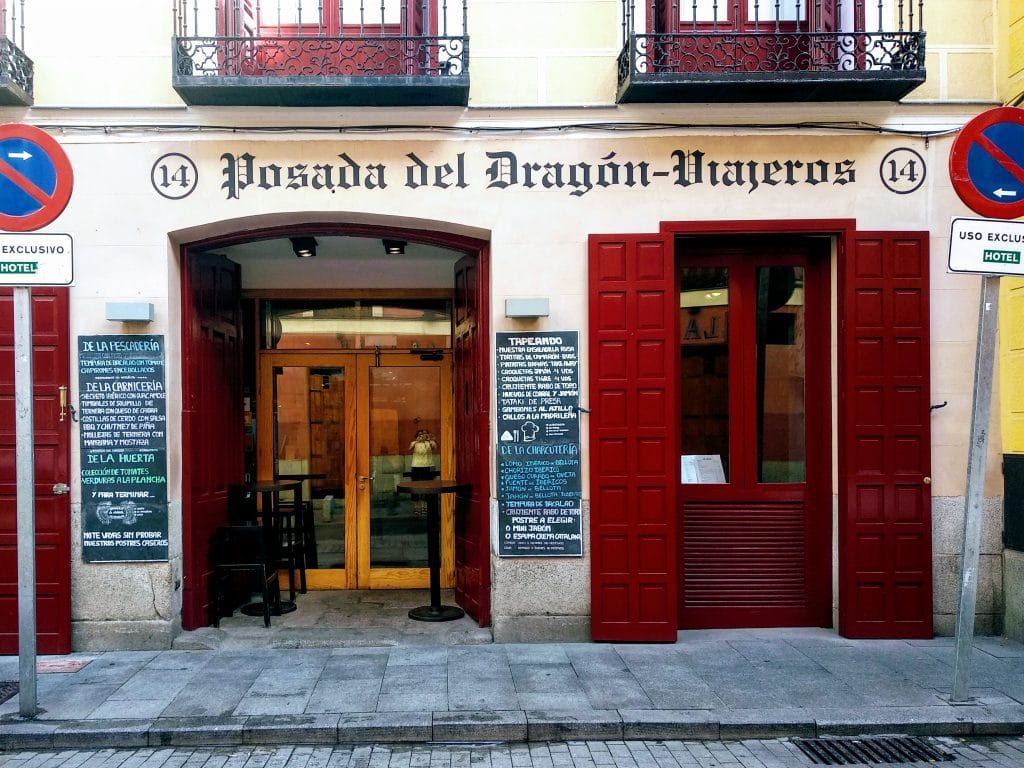
Two exceptional places to stay are Posada del León de Oro and Posada del Dragón. In both, you can actually see the 12th-century Christian wall preserved under glass in the bar and restaurant areas, then step out into a beautiful interior corrala.
The Noise Factor (Important!)
Here’s crucial advice for staying anywhere in Madrid’s centre: always request a room overlooking an interior patio, not the street. Madrileños love to party until the early hours, and street-facing rooms can be unbearably noisy. Interior patio rooms are not only quieter but also naturally cooler in summer – these courtyards were Madrid’s original air conditioning system. That said, never stay anywhere in Madrid during summer without modern air conditioning. This is non-negotiable.
Barrio de las Letras: Madrid’s Literary Quarter
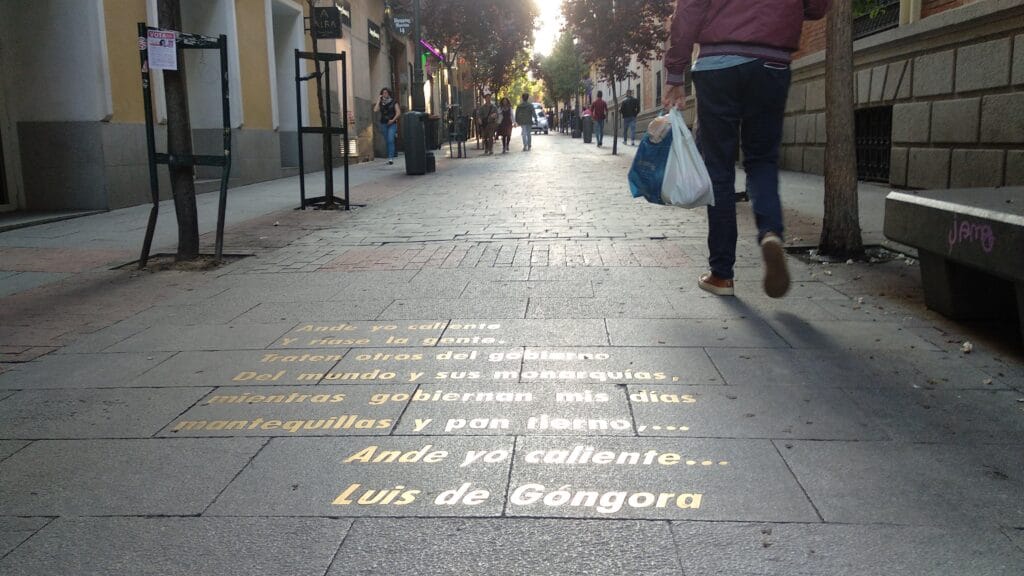
Just a few minutes east of Sol lies Madrid’s Literary District, where Cervantes penned Don Quixote. This area was the heart of Madrid’s Siglo de Oro (Golden Age from the 16th century to the early 17th century), when writers like Lope de Vega (whose house museum you can visit) and artists like Velázquez flourished.
While Cervantes’ house no longer stands, the neighborhood retains its artistic soul. It’s filled with atmospheric bars and restaurants, so again, prioritize interior-facing rooms.
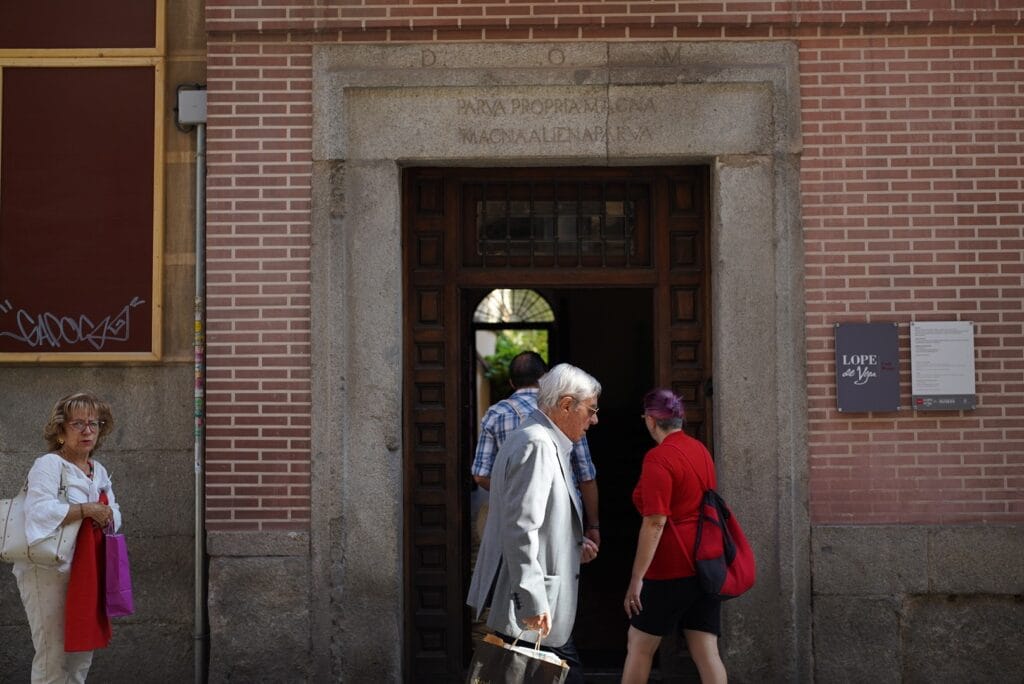
Having said that, my parents stayed at Hotel Catalonia Atocha on Calle de Atocha and were pleasantly surprised. Despite the lively street below, the hotel’s excellent double glazing kept the noise at bay. Still, if you want guaranteed peace and quiet, an interior room remains your safest bet.
A Word of Caution About Lavapiés
Lavapiés sits right across Calle de Atocha from Barrio de las Letras, and I recommend approaching this area with some care. For starters, stick near the Metro Antón Martín, close to the lovely Mercado de Antón Martín and the cinema Cine Doré.
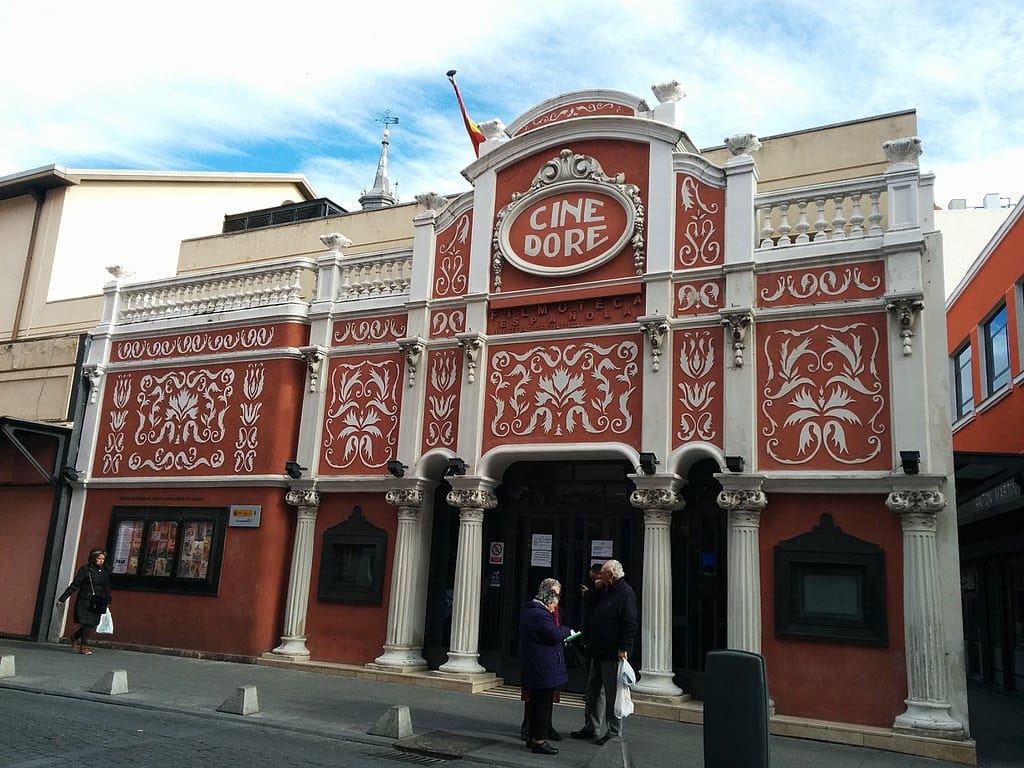
The Complicated Story of Lavapiés
Historically, Lavapiés has always housed Madrid’s working class. When Madrid became Spain’s capital in 1561, conversos (descendants of Jewish converts to Christianity) lived here among tanneries and the neighborhood literally smelled terrible. Around the same time, King Felipe II mandated that all brothels relocate to Lavapiés, keeping the “unseemly” activities away from nicer areas.
Since the 1970s, Lavapiés has been Madrid’s most multicultural neighborhood. More recently, it’s become trendy, but this has brought aggressive gentrification, soaring Airbnb numbers, and numerous evictions that have devastated local communities.
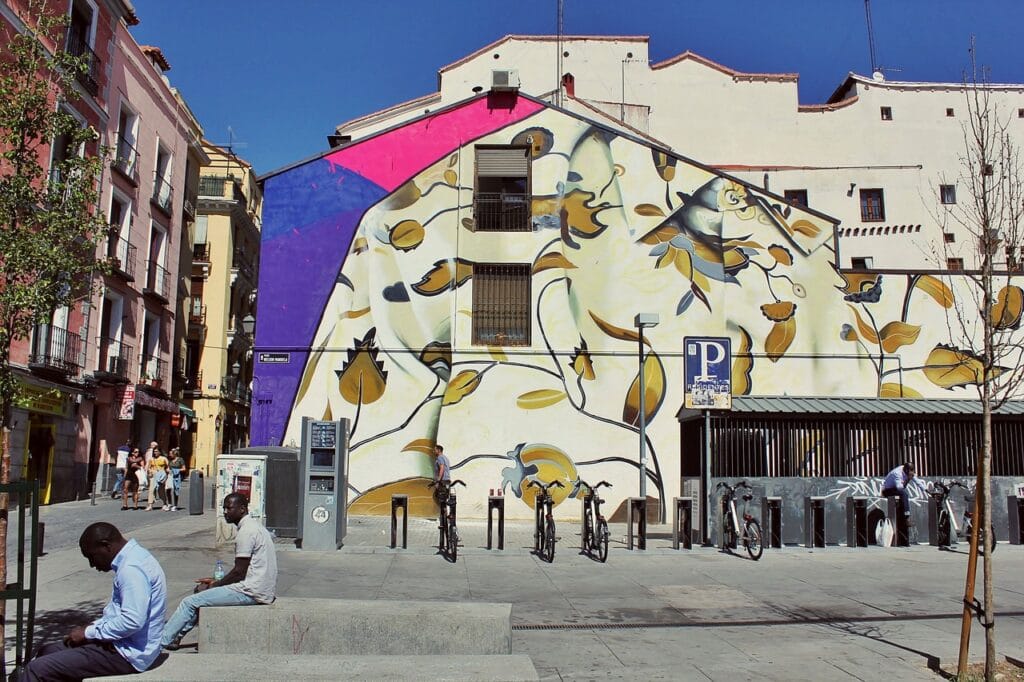
Unfortunately, this has created anti-tourist sentiment, and I must be honest: some areas, particularly around Tirso de Molina, have seen attacks on people wandering the streets late at night alone. While Madrid is generally very safe at night, this recent development in certain parts of Lavapiés is concerning. Stick to the areas near Antón Martín, and please avoid Airbnbs – they’re part of the problem. Choose properly licensed tourist apartments or hotels instead.
The Historic Center: Around Plaza Mayor
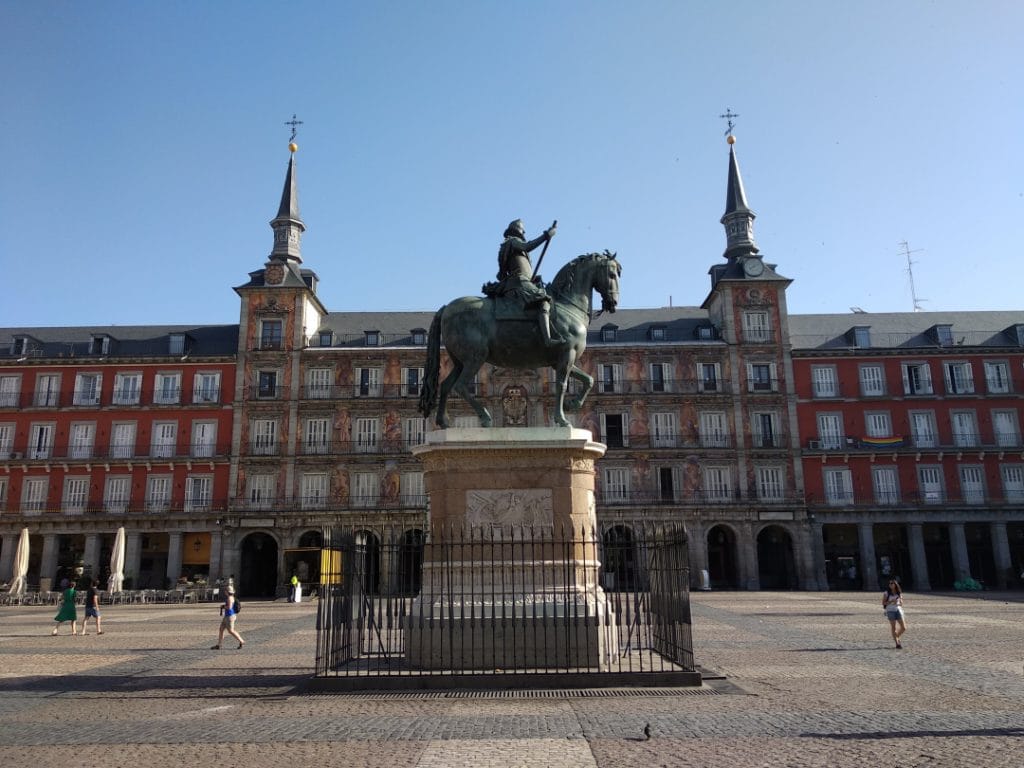
The area around Plaza Mayor puts you at the heart of everything and crucially close to the Royal Palace. Yes, it’s crowded and can be noisy, but it’s undeniably convenient and steeped in history. For history enthusiasts, consider the Pestana Collection Plaza Mayor. Located in what was once the butchers’ guild building (directly opposite the former bakers’ guild, now the tourist office), this hotel offers gorgeous views over Plaza Mayor. They have a rooftop pool, and I can personally vouch for their below-ground spa – I spent my birthday there last year, enjoying the pool, sauna, and massage. The staff were wonderful.
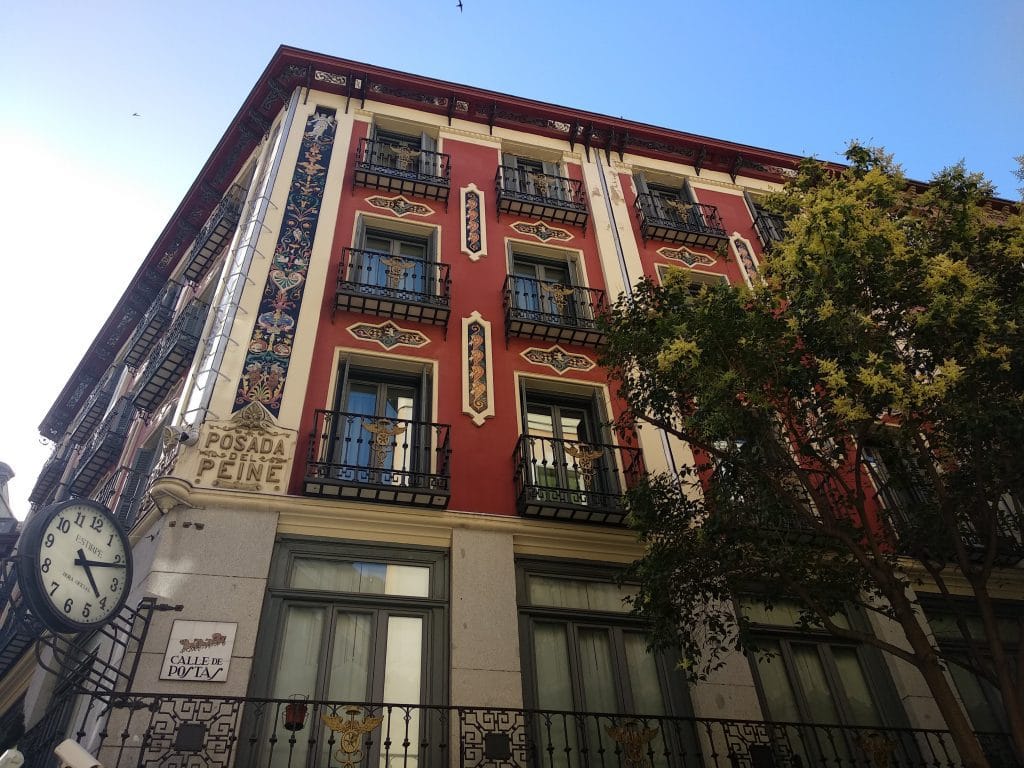
Just steps away stands the Posada del Peine, founded in 1610, making it Madrid’s oldest inn. (Peine means “comb” – not to be confused with pene, which, well, means something rather different and caused an amusing mix-up for a friend of mine!) The beautifully renovated, painted exterior is worth seeing even if you don’t stay there.
Secret Spots
If you’re interested in discovering the quiet corners within this busy area – and there are many – my ebook Quiet Madrid reveals all those secret spots where you can disconnect and unwind, even in the very center. It features original photographs from my wanderings and includes walking routes to help you experience a more peaceful side of Madrid.
Chueca and Malasaña: For Party People
These adjacent neighbourhoods are cool, youthful, and buzzing. Chueca is officially Madrid’s gay district, though both areas attract young, fashionable crowds. You’ll find trendy shops, excellent bars and restaurants, and beautiful late 19th-century buildings converted into charming hotels.
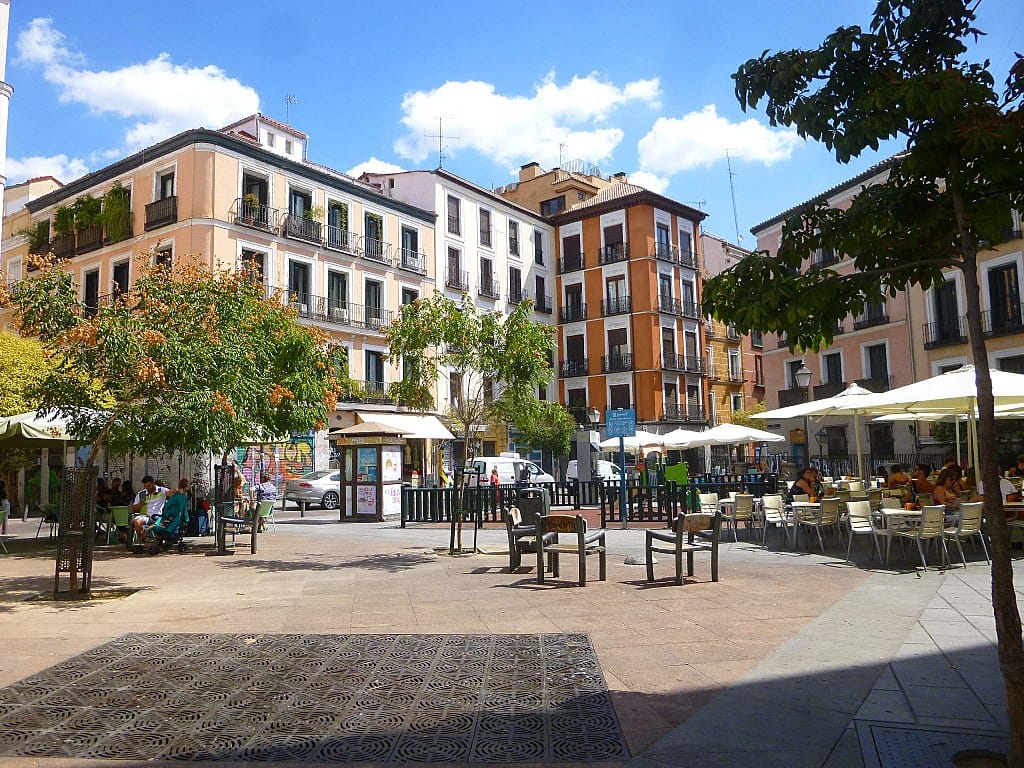
The downside? Noise, noise, noise. If you’re a party person who’ll be out until dawn anyway, perfect. If not, you absolutely must get an interior patio room. There’s no way around it – you simply won’t sleep otherwise.
Why I Don’t Recommend Barrio Salamanca
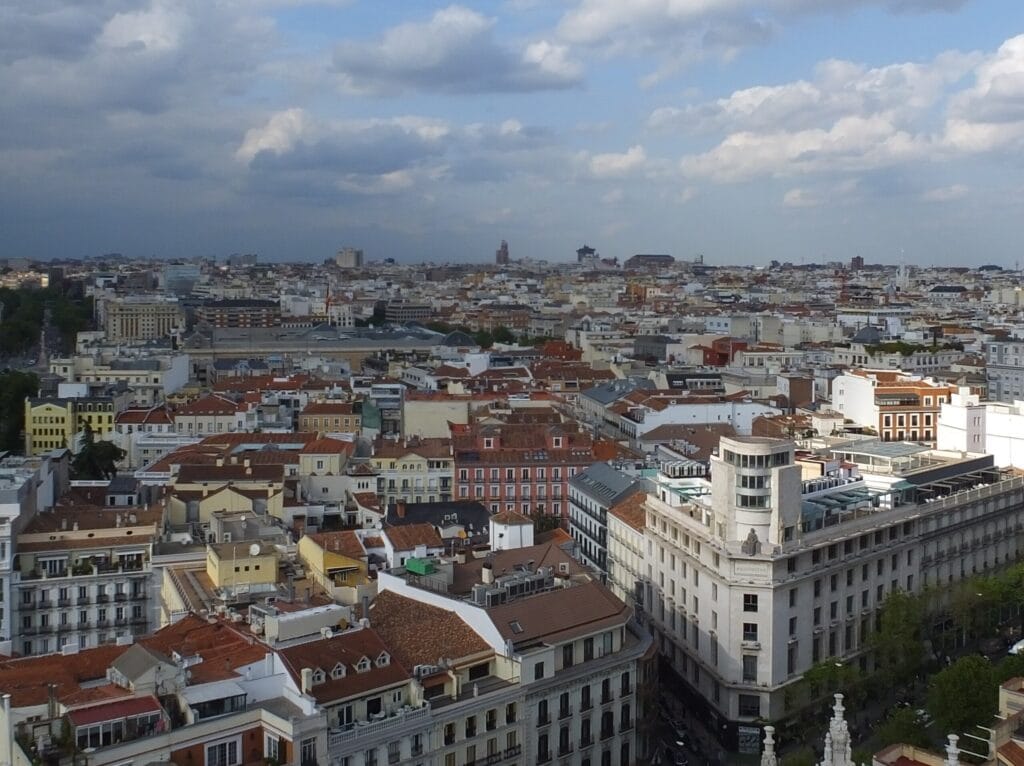
You’ll see Salamanca recommended elsewhere for its luxury accommodation, but I have strong reservations. While it offers high-end hotels with designer shopping (Gucci, Louis Vuitton, Hermès), it lacks soul and is quite far from major sites.
The Story Behind Salamanca
A look at Salamanca’s history reveals why it feels so soulless. In the mid-19th century, as Madrid became overcrowded with epidemics spreading, Queen Isabella II commissioned plans for new neighborhoods built on a grid with parks in a project known as the Plan Castro. These would help the city breathe and expand beyond its old walls.
Unfortunately, Isabella II was terribly corrupt (as was her inner circle), including the Marqués de Salamanca. He was a self-made man in the worst sense – well-connected to the royal family and willing to exploit it. He made his fortune through insider stock market trading, and when he learned about the new neighborhood plans, he bought massive amounts of land.
But here’s the problem: just as construction began, Isabella II was deposed. The Marqués lost his political connections and started cutting costs. Planned parks were scrapped and that situation has not been rectified. Buildings went higher than planned, creating a concrete jungle that gets surprisingly hot despite cooler northern winds.
The venture eventually bankrupted him, though he still had a few mansions left when he died, apparently penniless!
Better Luxury Alternatives
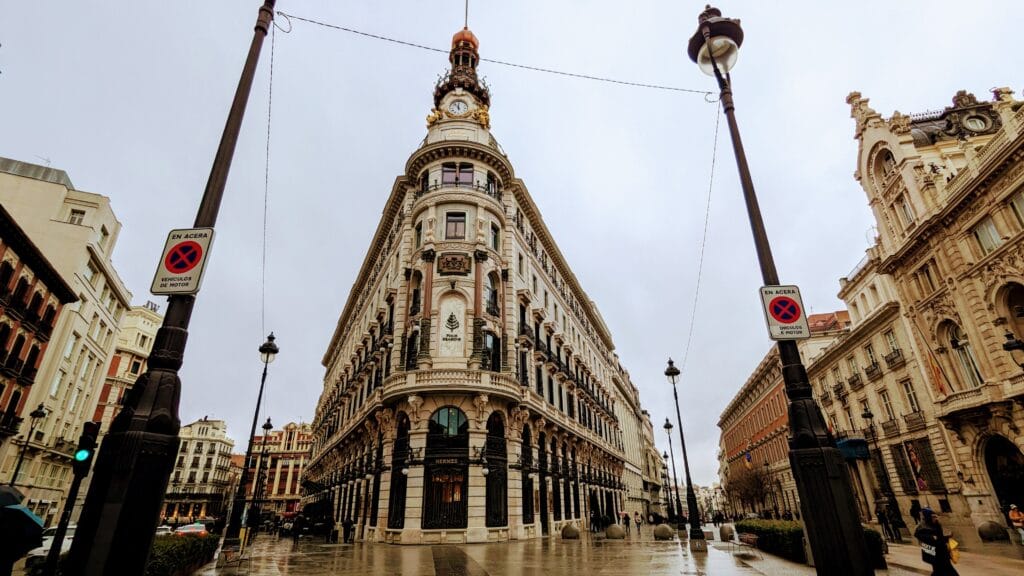
If you want luxury accommodation, stay central instead. The Four Seasons sits right next to Sol in a beautifully converted 19th-century building (only the facade with charming elephant heads beneath the windows was cleverly preserved). Or try the Mandarin Oriental Ritz, overlooking the Prado. Both are splendid, central, and far more convenient than Salamanca.
Chamberí: My Alternative to Salamanca
For a quieter, more residential feel with easy access to the center, Chamberí is ideal. After Salamanca’s construction, the first new developments in Chamberí were colonias – planned communities built under the “Ley de Casas Baratas” (Law of Cheap Housing) for working-class professionals like postal workers.
What Makes Chamberí Special
Unlike Salamanca, Chamberí followed the original plans with proper green spaces. The loveliest is Plaza de Olavide, where you can relax among locals in an elegant, livable neighborhood.
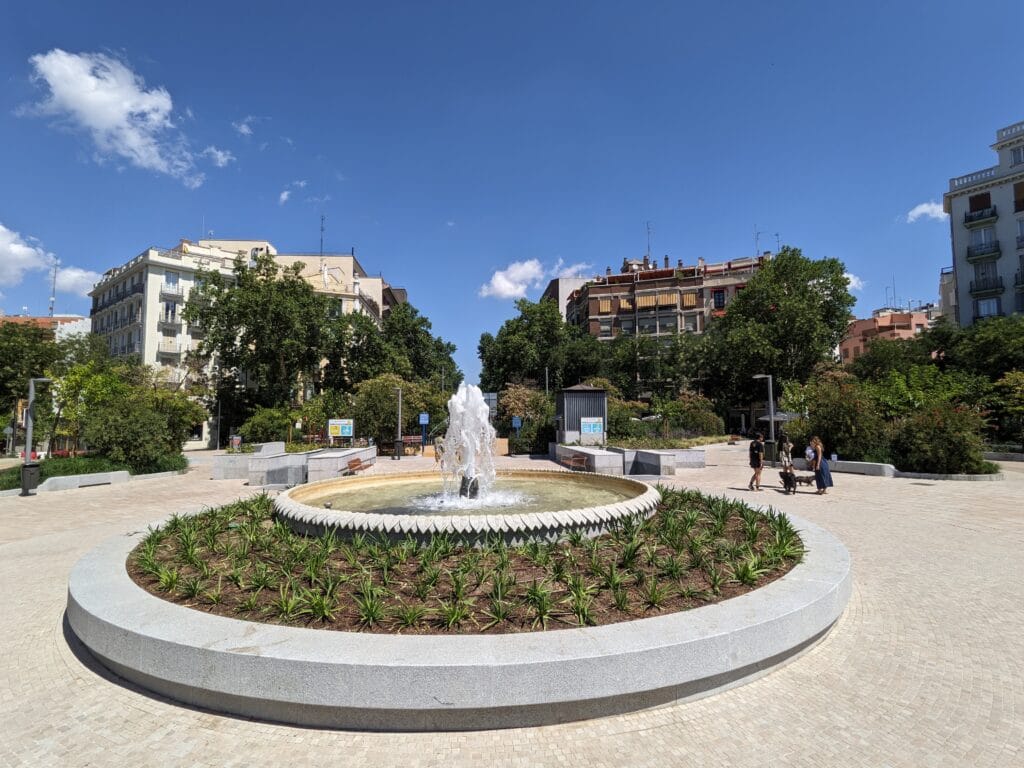
Chamberí has become somewhat upscale (pijo in Spanish), with polished shops and cafés, but it’s more affordable and better planned than Salamanca. I’m passionate about urban green spaces – Madrid desperately needs more trees, though our current local government disagrees with me. I’ll keep banging that drum!
Perfect for Business or Football
Chamberí is ideal if you’re visiting for a conference. Stay near Nuevos Ministerios station, which has direct lines to both Barajas Airport and IFEMA convention center. It’s also convenient for football matches at the Bernabéu, which can be a trek from other parts of the city. If you’re visiting for a short time on a layover, check out this post.
Beyond the Center: Budget-Friendly Options
Madrid’s housing crisis means even tourists on average budgets struggle to afford central hotels. Fortunately, Madrid’s Metro system is fantastic, making it easy to stay slightly outside the center.
Line 3: Your Best Friend
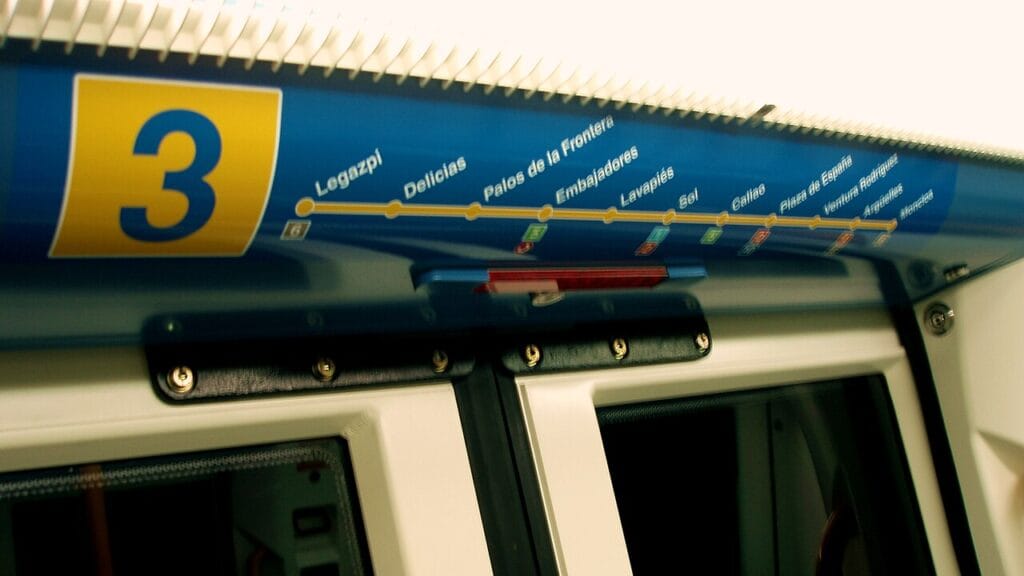
Metro Line 3 runs directly to Sol, putting you at the heart of everything. Along this line, you’ll find several affordable neighborhoods within the Arganzuela area:
Embajadores: Just below Lavapiés, more residential with less anti-tourism sentiment.
Delicias: Further down the line but actually closer to Atocha and the Reina Sofía Museum. This area is becoming hipper as younger generations move in. You’ll find cool galleries like El Águila (housed in a former brewery) and great, affordable places to eat and drink.
Legazpi: Stay near Matadero Arts Centre (closer to Legazpi station, as transport links weaken further along the river). The riverside here is perfect for cycling – you can ride all the way into the countryside in either direction.
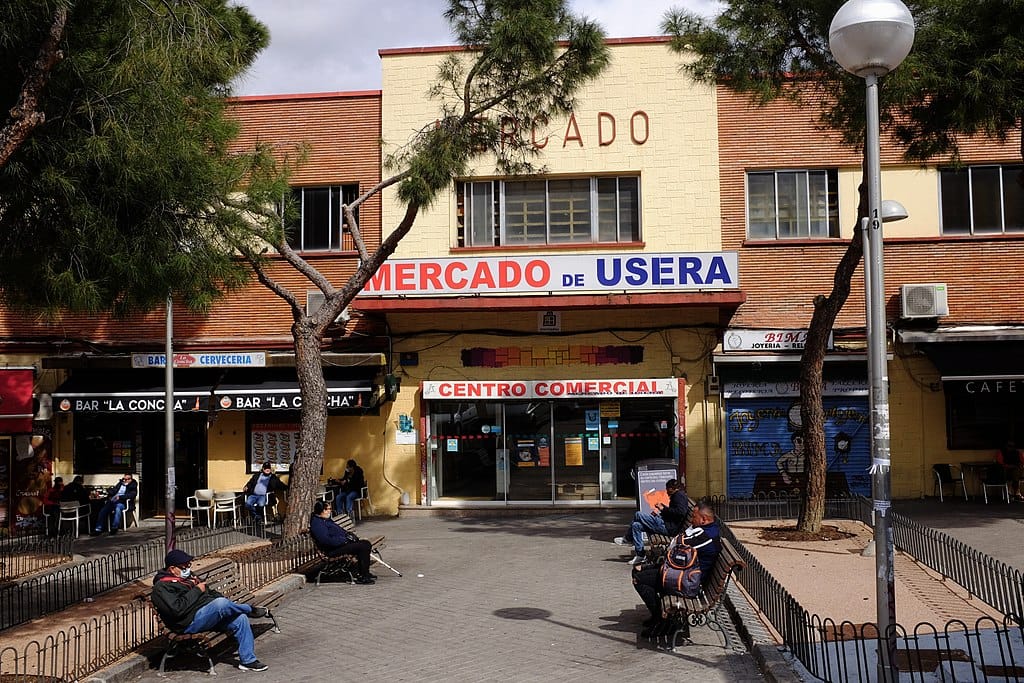
Almendrales: This is in my neighbourhood of Usera, also on Line 3, and it’s very affordable but a lot rougher round the edges. There’s a lot more searchable content on the area in this blog. It’s also great for the riverside.
Other Areas to Consider
Tetuán (Line 1): Much cooler in summer thanks to its northern location, cheaper, and close to Carabanchel but with a different vibe: working-class, affordable, and ethnically diverse. I’ll admit I don’t know Tetuán as well as other areas, but it seems charming from my visits.
Carabanchel: South of the river next to Usera. Be careful with location, as transport connections can be poor. However, it’s wonderful for art lovers – former industrial factories are being converted into galleries. I love Veta, a free gallery showing cutting-edge art.
Puerta del Angel: Actually walkable to the city center (if you don’t mind hills) via the historic Puente de Segovia bridge. However, this area has been aggressively gentrified recently by a company calling itself “Madlyn” (a play on Brooklyn – they’re positioning it as Madrid’s Brooklyn). This Spanish vulture fund has been buying property and opening coffee shops, really pushing to change the neighborhood’s character. If you do stay here, be considerate about noise and choose a proper hotel rather than an Airbnb. The lovely Mercado de Tirso de Molina is worth visiting in the evening if you’re in this area.
Final Thoughts
Madrid rewards those who look beyond the obvious tourist zones. Whether you choose historic La Latina, literary Barrio de las Letras, elegant Chamberí, or a budget-friendly option further out, you’ll find that Madrid’s neighborhoods each have their own distinct personality.
Remember the golden rules:
- Always request interior patio rooms for quieter, cooler accommodation. Failing that make sure you have double glazing!
- Never stay anywhere without air conditioning in summer
- Avoid Airbnbs – they harm local communities and drive up housing costs
- The Metro is your friend – don’t be afraid to stay slightly outside the center
If you’re like me and seek peaceful corners even in busy cities, Quiet Madrid will be your perfect companion. It’s filled with my original photographs and reveals hidden gardens, secret courtyards, and tranquil spots throughout Madrid – including many right in the center that most visitors never discover.
Whatever you choose, Madrid will captivate you. It’s a city that comes alive at night, values history, and always has another secret waiting around the next corner.


Hi Felicity – thanks for the informative guide even for a Madrid veteran like me! I hope you don’t mind if I mention a couple of typos – Vistillas rather than Vistias, and the Catalonia las Cortes’s entrance is on c/del Prado. I’m sure I stayed in a hostal (La Isla) in the same space when I was a student in the 80s. Un saludo, Jason